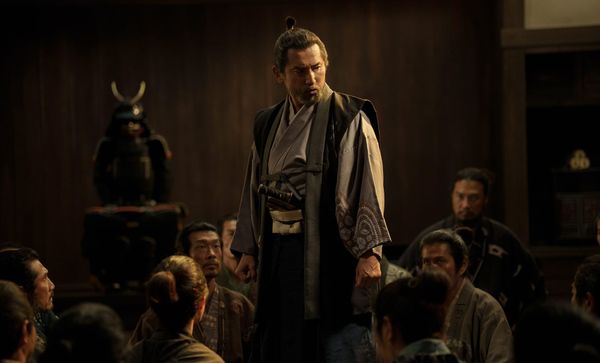
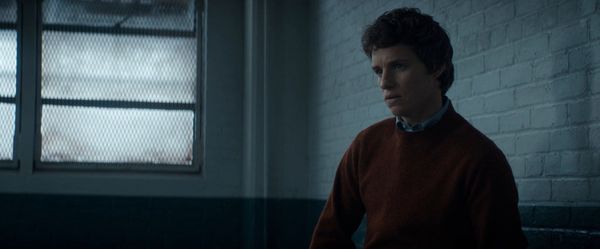
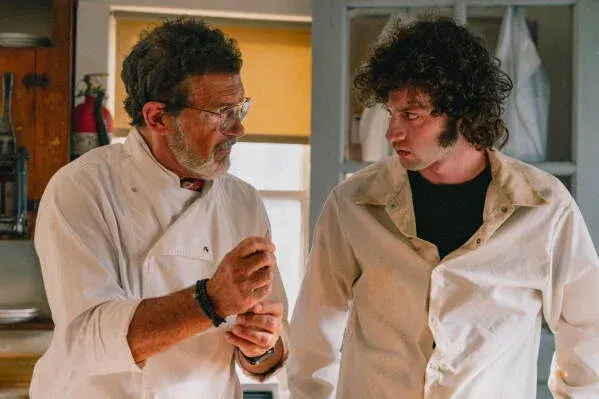
Every debt is remembered.

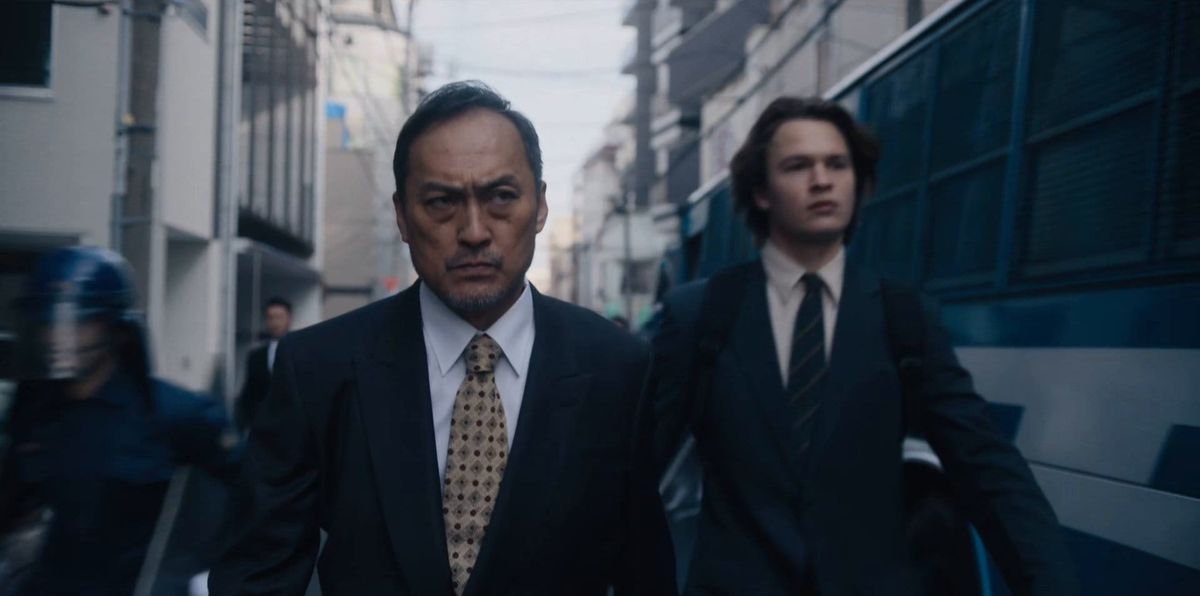
TOKYO VICE is far more than a crime drama, serving instead as an absorbing examination of ambition, cultural identity, institutional corruption, and the uneasy relationship between truth and power.
Across two remarkable seasons, the series transforms modern Tokyo into a living, breathing character where every neon-lit street, smoky hostess club, and cramped newspaper office conceals another layer of moral complexity. Rather than relying on sensationalism, it embraces patience, allowing its characters and their choices to reveal the invisible systems that govern society.
Set primarily during the late 1990s, the series unfolds at a fascinating moment in modern Japanese history, when the country was still grappling with the aftermath of the collapse of its economic bubble, a period remembered as the beginning of the "Lost Decade." Economic stagnation, corporate uncertainty, and changing social expectations quietly reshaped Japan while organized crime groups continued to exert influence over finance, construction, nightlife, entertainment, and politics.
Although legislation gradually reduced the yakuza's public visibility, their presence remained deeply woven into many aspects of Japanese society, with TOKYO VICE using this historical backdrop not simply as atmosphere but as the foundation for a story about institutions struggling to modernize while old networks of loyalty, obligation, and corruption continued to endure.
At its centre is Ansel Elgort as Jake Adelstein, an ambitious American determined to become the first foreign crime reporter at one of Japan's largest newspapers, with Elgort delivering one of the strongest performances of his career by resisting the temptation to portray Jake as an infallible outsider.
Instead, Jake emerges as someone driven equally by idealism and ego, whose relentless pursuit of truth repeatedly places both himself and those around him in danger. Impulsive, occasionally naïve, frequently reckless, and often wrong, he becomes a far more compelling protagonist than the traditional investigative hero who always seems several steps ahead.
Working beside him is Ken Watanabe as veteran detective Hiroto Katagiri, whose understated performance serves as the moral centre of the series. Rarely raising his voice yet giving every conversation enormous weight, Katagiri understands that justice within deeply entrenched institutions cannot be achieved through dramatic gestures alone, but instead requires patience, compromise, careful timing, and the willingness to survive long enough to make a genuine difference.
His evolving relationship with Jake becomes one of the emotional anchors of the series, built not upon easy friendship but upon mutual respect forged through shared danger and increasingly difficult moral choices.
The supporting cast is equally exceptional, with Rinko Kikuchi bringing remarkable intelligence and quiet authority to editor Emi Maruyama, whose mentorship reflects both the discipline and limitations of Japanese newsroom culture.
Rachel Keller gives Samantha unexpected emotional depth, transforming what could have been a conventional hostess-club storyline into an affecting exploration of survival, independence, identity, and belonging.
Perhaps the greatest revelation is Shō Kasamatsu as Sato, whose journey from ambitious yakuza foot soldier to increasingly conflicted leader develops into one of modern television's richest character arcs.
His quiet decency constantly collides with the brutal expectations of organized crime, creating a tragic tension that grows more affecting with every episode while illustrating how loyalty, compassion, and violence often coexist within the same individual.
Every major character feels shaped by social expectations rather than existing solely to advance the plot, allowing the series to consistently reject simplistic divisions between heroes and villains. Even those responsible for terrible acts often operate according to coherent codes of loyalty, honour, tradition, or survival, creating a world where moral certainty becomes increasingly elusive.
One of TOKYO VICE's greatest strengths lies in its depiction of journalism itself, which refuses to romanticize investigative reporting and instead portrays it as slow, frustrating, collaborative work built upon trust, persistence, verification, endless dead ends, and countless conversations before finally uncovering something meaningful.
The newspaper newsroom becomes one of the series' most fascinating environments, governed by hierarchy, ritual, etiquette, and precision, while younger reporters spend years earning responsibilities that Western audiences might assume would arrive immediately. This attention to professional culture gives the series an authenticity rarely found in newsroom dramas.
The same care extends to policing, with the Tokyo Metropolitan Police presented as neither glorified nor condemned, but as professionals operating within bureaucratic constraints where solving cases often requires negotiation with prosecutors, senior officers, politicians, and rival departments.
Katagiri repeatedly demonstrates that intelligence alone cannot dismantle corruption when entire systems prioritize stability over uncomfortable truths, reinforcing one of the series' central ideas that meaningful justice is often measured in small victories rather than sweeping triumphs.
Perhaps the show's greatest achievement lies in its nuanced portrayal of the yakuza, which popular culture frequently depicts through either glamour or relentless brutality. TOKYO VICE recognizes elements of both without becoming consumed by either perspective, instead presenting criminal organizations as structured institutions governed by hierarchy, ceremony, business interests, family loyalty, and public image.
Violence remains ever-present but is often restrained until absolutely necessary, making every eruption feel genuinely shocking while illustrating that organized crime survives not because of constant bloodshed, but because it embeds itself within legitimate commerce, entertainment, finance, politics, and everyday life.
Visually, TOKYO VICE is consistently breathtaking, presenting Tokyo with a richness rarely matched on television as neon reflections shimmer across rain-soaked streets while narrow alleyways, restaurants, karaoke bars, newspaper offices, hostess clubs, apartment buildings, pachinko parlours, police stations, and luxury hotels all contribute to an extraordinary sense of place.
Rather than presenting Tokyo as an exotic spectacle for foreign audiences, the city feels lived-in, contradictory, endlessly fascinating, and unmistakably real, becoming as essential to the narrative as any member of the cast.
The series also benefits enormously from the influence of Michael Mann, whose direction of the pilot episode and role as executive producer leave fingerprints throughout the production in the form of meticulous procedural detail, emotionally restrained protagonists, urban landscapes illuminated by artificial light, and an enduring fascination with professionals operating at the highest levels of their respective worlds.
Yet TOKYO VICE never feels like an imitation, developing its own identity by blending Mann's cinematic precision with distinctly Japanese perspectives on duty, honour, community, and sacrifice.
Language itself becomes one of the show's defining strengths, with the series embracing both Japanese and English naturally rather than forcing everyone into a single language for convenience. Characters constantly navigate linguistic and cultural barriers, allowing bilingual conversations to reflect shifting power dynamics and differing worldviews while Jake's gradual mastery of Japanese never erases his status as an outsider, reinforcing the idea that genuine acceptance requires far more than linguistic fluency.
The production design deserves enormous praise for recreating late-1990s Tokyo with remarkable authenticity, as its technology, fashion, vehicles, offices, newspapers, nightlife, advertising, and everyday routines evoke a society standing on the threshold between analogue traditions and the digital age while grounding every episode in a very specific historical moment.
Throughout both seasons, TOKYO VICE continually asks difficult questions about whether truth can overcome institutions designed to suppress it, whether justice is possible without compromise, and how much of ourselves we are willing to sacrifice in pursuit of purpose.
The answers remain intentionally ambiguous, with nearly every victory carrying painful consequences and many defeats revealing unexpected forms of courage, while the series recognizes that meaningful change rarely arrives through dramatic revelations but instead emerges through persistence, integrity, and countless individuals choosing to do the right thing despite knowing they may never receive recognition.
Few modern television dramas balance procedural storytelling, historical context, character development, and cultural observation with such confidence, as TOKYO VICE respects its audience by refusing simplistic explanations or easy resolutions while trusting viewers to appreciate ambiguity, moral uncertainty, and the slow accumulation of consequences that defines both investigative journalism and genuine institutional change.
Ultimately, TOKYO VICE succeeds because it understands that its story has never been solely about organized crime, but about the people who choose to confront systems far larger than themselves despite knowing they may never fully succeed, resulting in a richly acted, meticulously researched, visually captivating, and emotionally resonant series that stands among the finest television dramas of the twenty-first century while offering not merely an unforgettable portrait of Tokyo, but a profound meditation on courage, identity, institutional power, and the enduring cost of seeking the truth.