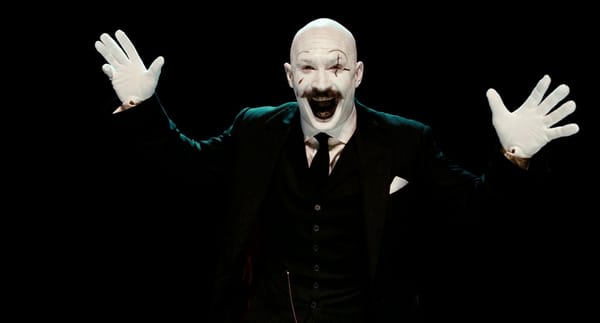
The music teacher your guidance counselor warned you about.


THE LOW TONES CLUB is the kind of series that understands music is never just music. It’s identity, rebellion, friendship, pride — and sometimes the only language a group of teenagers has when the rest of the world refuses to listen.
Disney’s Colombian musical comedy drama wraps those ideas in bright colors, youthful energy, and a familiar coming-of-age framework, but underneath the polished surface is something more sincere: a love letter to Latin American music and the communities that grow around it.
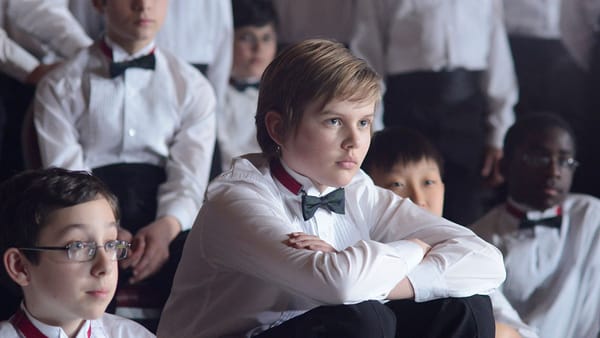
At the center of the story is a group of students who feel invisible in their own school — misfits, outsiders, kids whose talents sit just below the surface of what teachers and classmates bother to notice. Their solution isn’t confrontation; it’s formation. They create a band, the "Low Tones," carving out a space where the rules of popularity and expectation no longer apply. What follows isn’t just a musical competition arc; it’s the slow, intentional construction of a shared identity.
The presence of Carlos Vives is what anchors the show culturally. He doesn’t arrive as a novelty cameo or a nostalgic celebrity. Instead, as the unconventional teacher Amaranto Molina, he functions like a bridge — a living embodiment of the musical tradition the younger characters are trying to inherit.
Vives has spent decades blending vallenato, pop, and Caribbean rhythms into something unmistakably Colombian, and the show honors that legacy. His character carries the quiet authority of someone who has already walked the path the kids are just beginning to tread.
The soundtrack composed by Carlos Vives is where THE LOW TONES CLUB finds its strongest voice. Disney productions often chase generic pop safety, but here the soundscape leans proudly into regional flavor: Caribbean percussion, accordion textures, and Latin pop melodies that feel rooted rather than manufactured. It gives the series an identity that separates it from the countless teen band stories that could unfold anywhere. This one belongs to Colombia — culturally, rhythmically, and visually.
Narratively, the show follows the classic ensemble formula. Each member of the band carries their own insecurity: stage fright, family expectations, financial pressure, or the fear of mediocrity. While the scripts rarely reinvent the structure of youth dramas, they execute the formula with a specific warmth. The conflicts are recognizable — rival groups, school politics, performance anxiety — yet the emotional beats feel grounded because the friendships feel genuine.
Visually, the series embraces brightness rather than grit. School hallways pulse with color, rehearsal spaces feel alive with movement, and performance sequences lean into the joyful chaos of young musicians discovering how to work together. The camera rarely sits still during musical numbers; it moves with the rhythm, capturing the sense that these kids are building something bigger than themselves.
What makes the show resonate most is its optimism. THE LOW TONES CLUB believes in collective creativity — in the idea that a band is not just a musical arrangement but a social one. Each member fills a gap the others cannot. The shy one learns confidence; the confident one learns humility; the outsider learns they were never truly alone.
Carlos Vives’ involvement deepens that message. His career has always been about fusion — old and new, traditional and modern — and the series reflects that philosophy. The band doesn’t reject the past; it builds on it. Their music becomes a conversation across generations, proving that the "low tones" often carry the most weight.
By the final episodes, the series stops being about whether the band wins competitions or earns mainstream recognition. It becomes about something quieter and more meaningful: whether the characters learn to believe in the sound they create together. Success, in this story, is less about the thunder of applause and more about the simple, radical act of belonging.
THE LOW TONES CLUB isn’t trying to revolutionize television storytelling. It doesn’t need to. What it offers instead is a joyful, music-driven coming-of-age story that celebrates Colombian culture, youth creativity, and the strange magic that happens when a few uncertain voices finally find their harmony.
It’s bright, sincere, rhythmically alive — and at its best, it reminds you that the most powerful music often starts with the quietest notes.