Welcome to GoodFellas — don’t get comfortable.

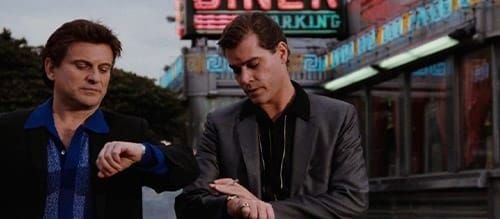
GOODFELLAS is Martin Scorsese at his most electric — a film that doesn’t just depict the American mob but immerses you in its rhythm, seduction, and eventual rot. It’s less a crime drama than a fever dream told by someone who lived fast enough to outrun the consequences… until he didn’t. Scorsese builds the film with the swagger of a nightclub entrance and the inevitability of a prison sentence. It’s about loyalty until loyalty collapses, glamour until glamour curdles.
Ray Liotta’s Henry Hill is the perfect narrator because he’s neither mastermind nor brute — he’s the wide-eyed kid who decides the rules don’t apply to him if he stands near the men who make the rules. Liotta plays him with manic charm and gathering panic: a man who loves the lifestyle long before he understands the lifestyle doesn’t love him back. The famous “As far back as I can remember…” opening isn’t nostalgia; it’s confession disguised as swagger.
Robert De Niro’s Jimmy Conway and Joe Pesci’s Tommy DeVito are the twin gravitational pulls of Henry’s world. De Niro’s Jimmy is the calm, smiling embodiment of transactional affection — a man whose generosity lasts exactly as long as it benefits him. Pesci turns Tommy into one of cinema’s great terrors: unpredictable, hilarious, lethal. His violence isn’t thematic; it’s reflexive. The “Funny how?” scene remains iconic not because it explodes, but because it could explode — that’s the tension of the lifestyle Scorsese is dissecting.
What makes GOODFELLAS so potent is its refusal to romanticize even when it seduces. The Copacabana tracking shot, the piles of cash, the fur coats, the stolen goods — all of it is framed with intoxicating momentum. But Scorsese always shows the cost: paranoia, betrayal, addiction, spiraling chaos. The editing by Thelma Schoonmaker turns the film into a bloodstream, pulsing faster and faster as Henry’s life falls apart. The cocaine-fueled final day — helicopters overhead, sauce on the stove, guns in the glovebox — plays like a panic attack rendered as cinema.
Lorraine Bracco’s Karen Hill is the film’s secret weapon. Her narration and perspective puncture the myth from inside. Her complicity isn’t written as moral failure but as a testament to how seductive power can be when the world offers few alternatives. The scene where Henry hands her a gun and she admits she’s turned on by the danger is one of Scorsese’s most honest moments: the allure is real, even when the danger is fatal.
By the time Henry turns informant and the glamour evaporates into witness protection beige, GOODFELLAS reveals its thesis: crime never pays, but it pays beautifully until the moment it destroys you. The tragedy isn’t that Henry loses the mob life; it’s that he spends the rest of his life mourning a world that was always built on lies, greed, and the inevitability of betrayal.
Scorsese’s masterpiece endures because it captures the American dream’s gangster variant with relentless clarity: the hunger for more, the belief that rules are optional, the thrill of rising fast, and the terror of falling faster.
It’s not a cautionary tale.
It’s a seduction told by a survivor who still misses the kiss of the flame.