Discipline doesn’t raise children. Music does.

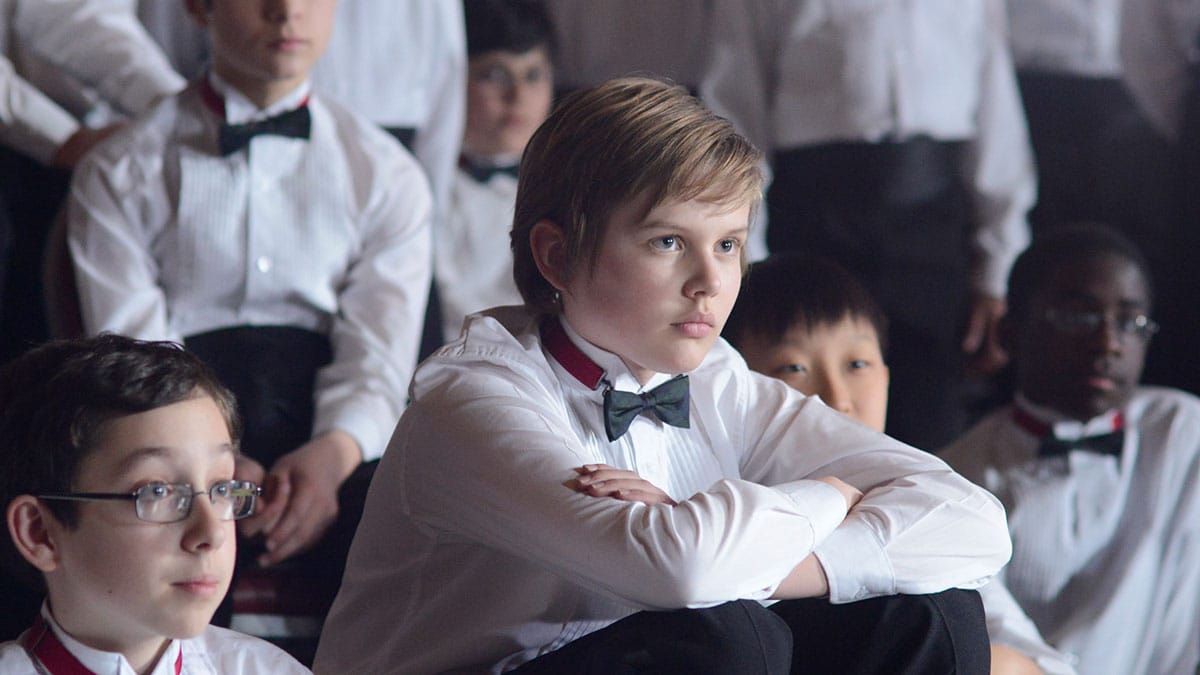
BOYCHOIR is a quiet, earnest film that knows exactly what kind of story it wants to tell—and, thankfully, doesn’t try to inflate itself into something grander than its own voice can sustain.
It’s a coming-of-age drama built around discipline, grief, and the strange tenderness of collective sound, and when it works, it works because it stays small and sincere.
At its center is Stet, a gifted but angry boy pushed into a prestigious choir school after personal loss. BOYCHOIR understands that talent isn’t a magic salve; it’s just another pressure point. The film resists the urge to mythologize genius and instead frames singing as labor—repetition, breath control, posture, humiliation, and incremental trust. That grounding choice gives the movie its emotional credibility.
Dustin Hoffman’s conductor Master Carvelle is deliberately severe, almost abrasive, but BOYCHOIR avoids turning him into a cartoon tyrant. His harshness feels rooted in belief: belief in the music, belief in standards, belief that excellence is an act of respect. The tension between cruelty and care is never fully resolved, which is exactly right. Real mentors are often contradictions.
What really elevates BOYCHOIR, though, is how it treats choral music itself—not as background decoration, but as a communal language. The film lingers on harmonies forming, cracking, and reforming. Individual voices matter, but the point is the blend. The message is subtle but firm: belonging doesn’t erase pain, but it gives pain somewhere to sit without consuming everything.
Visually, BOYCHOIR is restrained to the point of austerity. Cool interiors, disciplined framing, very little visual excess. That restraint mirrors the emotional world of the boys themselves—feelings tightly held, only allowed to surface through sound. When the film finally lets emotion crest, it earns it.
Is BOYCHOIR predictable? Yes, in structure. But not in spirit. It’s not chasing surprise; it’s chasing resonance. And like a well-trained choir, it hits its notes cleanly, without showboating, trusting that clarity and honesty are enough.
BOYCHOIR isn’t about winning or proving talent. It’s about learning when to listen, when to breathe, and when to let your voice join something larger than yourself. Quiet films like this don’t shout for attention—but they linger, humming softly, long after the final note fades.