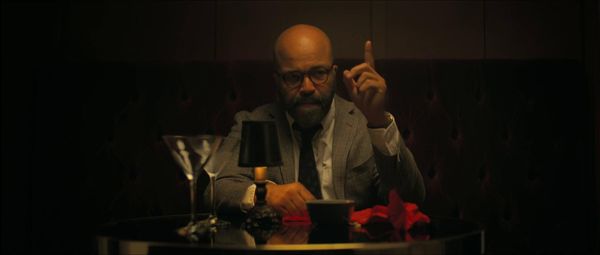
The man of many turns.

There is a reason THE ODYSSEY has endured for nearly three millennia. It is not simply because of Cyclopes, sirens, sea monsters, or the intervention of gods. Those elements have always been the epic's most visible features, but never its most important ones. At its heart, the story asks a quieter question: what becomes of a person after years of violence, displacement, temptation, and survival? Christopher Nolan understands that from the opening moments of THE ODYSSEY, crafting a film that is less concerned with mythological spectacle than with the slow reconstruction of identity.
Countless adaptations have treated Odysseus as an untouchable hero. Nolan instead presents him as a man who has become a stranger to himself. The voyage home is not merely a physical journey across the Mediterranean but an emotional reckoning with memory, responsibility, grief, and the weight of choices made in war. Every island, every encounter, and every trial becomes another test of character rather than simply another obstacle to overcome.
That perspective gives the film an unexpected intimacy. Even at its largest, THE ODYSSEY never feels consumed by its own scale. Battles are impressive not because of their choreography alone, but because every victory carries another moral burden. Moments that could have become demonstrations of visual effects instead become reflections on pride, leadership, temptation, or regret. Nolan has always been fascinated by time, memory, and perception; here, those interests find perhaps their most natural literary companion.
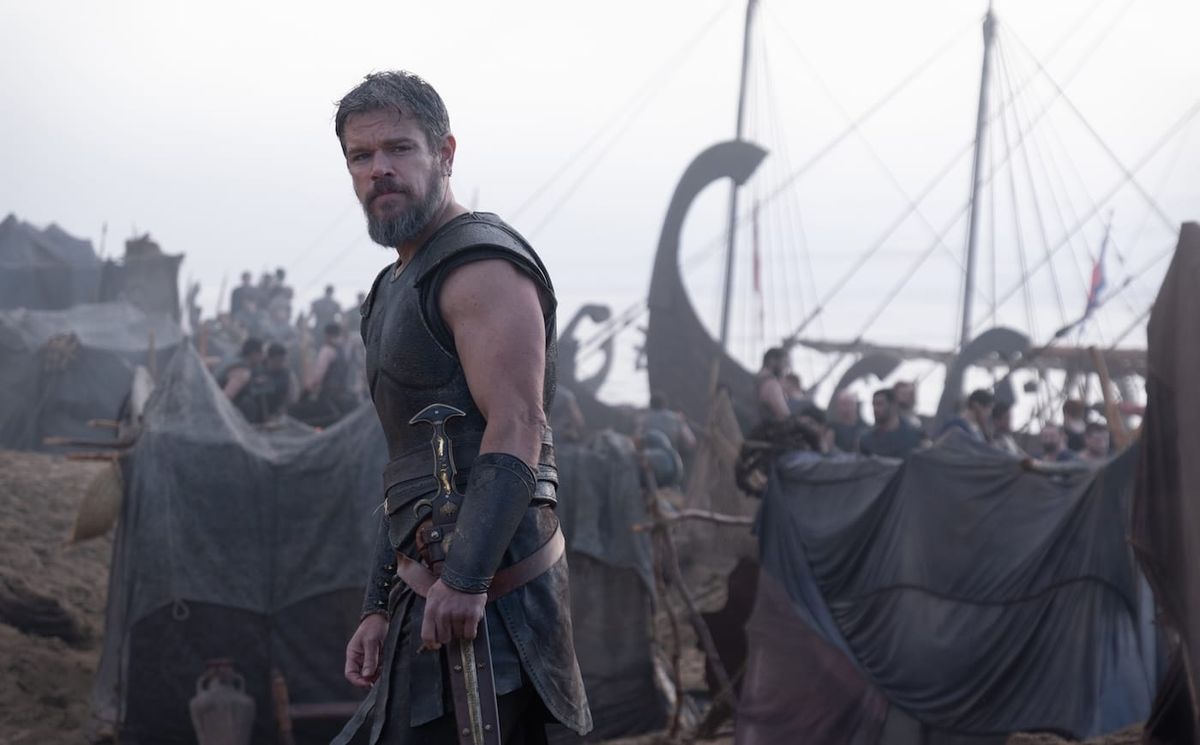
Matt Damon delivers one of the finest performances of his career. His Odysseus possesses intelligence, courage, and leadership, but what lingers is the exhaustion behind his eyes. Damon understands that this is not the story of an invincible hero. It is the story of a man carrying years of grief, guilt, and responsibility, desperately trying to find the home he fears may no longer exist. His performance never feels exaggerated; instead, it is grounded in restraint, allowing small gestures and silences to communicate what words cannot.
Anne Hathaway gives Penelope extraordinary emotional depth. She refuses to play patience as passivity. Every scene reflects a woman who has endured years of uncertainty while quietly holding an entire kingdom together. Hathaway makes Penelope every bit as resilient as the husband whose return everyone awaits, and she brings a quiet strength that anchors the film whenever the story returns to Ithaca.
Tom Holland is exceptional as Telemachus. His performance captures the uncertainty of a son raised almost entirely by stories of a father who has become more myth than man. Holland balances vulnerability with growing confidence, making Telemachus' own journey toward adulthood every bit as compelling as Odysseus' return. His arc adds another emotional layer to the film, emphasizing that the consequences of absence are felt just as deeply as the trials of the journey itself.
Among the supporting cast, Samantha Morton leaves perhaps the strongest impression. Her Circe is mysterious without becoming theatrical, dangerous without ever losing her humanity. Charlize Theron lends Calypso genuine emotional complexity, transforming what could have been a simple temptation into something far more tragic and introspective. Zendaya brings quiet wisdom to Athena, while Robert Pattinson gives Antinous a chilling arrogance that makes the conflict awaiting Ithaca feel inevitable rather than manufactured. John Leguizamo, Himesh Patel, Jon Bernthal, Benny Safdie, Lupita Nyong'o, Elliot Page, and the rest of the ensemble ensure that even brief appearances carry emotional and dramatic weight, reinforcing the sense that every encounter matters.
Visually, THE ODYSSEY is astonishing. Hoyte van Hoytema's cinematography transforms the Mediterranean into a place of equal beauty and terror, capturing both its vast openness and its isolating danger. Ludwig Göransson's score never overwhelms the images, instead allowing silence and uncertainty to occupy just as much space as triumph. Nolan's commitment to practical filmmaking gives every storm, every coastline, and every battle a tangible sense of scale that computer-generated spectacle rarely achieves, grounding the myth in something that feels physically real.
The Cyclops and the Laestrygonians, meanwhile, are genuinely terrifying. Nolan refuses to treat mythology as fantasy escapism. These creatures feel ancient, unknowable, and profoundly unsettling, recalling the fear that must have accompanied the earliest tellings of the epic. Their appearances are less action sequences than encounters with something beyond ordinary human understanding, making them among the most unforgettable moments Nolan has ever put on screen.
What ultimately distinguishes THE ODYSSEY is its patience. It trusts silence. It trusts its audience. It understands that the greatest conflicts are rarely fought with swords alone, but within people struggling to reconcile who they once were with who they have become. This sense of introspection gives the film a lasting emotional resonance that extends beyond its narrative.
Christopher Nolan has not simply adapted Homer's epic. He has rediscovered the humanity that has allowed it to endure for nearly three thousand years. Beneath the gods, monsters, and legendary voyages lies a story about love, longing, home, and the quiet hope that, after everything life takes from us, some part of ourselves can still be found again.