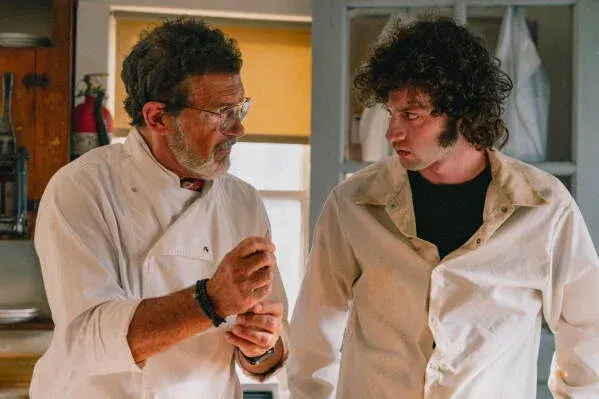
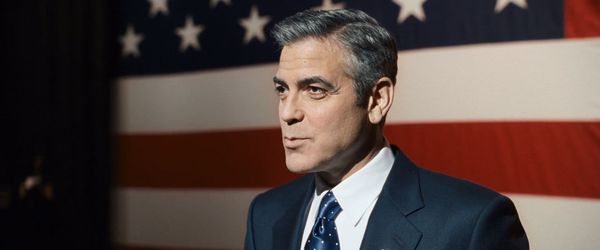
The whole world is still watching.

There is a characteristic cadence to an Aaron Sorkin script—a rapid-fire, metronomic ping-pong of intellect and ideology where everyone in the room is the smartest person in the room, or at least capable of landing a devastating witty retort on two seconds' notice. In THE TRIAL OF THE CHICAGO 7, Sorkin finds a historical canvas uniquely built to accommodate his peculiar brand of operatic rhetoric. The 1969 trial of seven anti-Vietnam War protesters charged with conspiracy and inciting a riot at the 1968 Democratic National Convention was never simply a judicial proceeding. It was a circus, a piece of deliberate political performance art staged by a Nixon Justice Department intent on sending a chilling signal to the American Left. Viewed today, the film functions less as a period artifact and more as a mirror held up to contemporary political polarization, echoing modern anxieties surrounding civil disobedience, state surveillance, and the expanding boundaries of executive power.
Sorkin, directing his second feature after MOLLY'S GAME, approaches this volatile moment in American history not as an austere documentary historian, but as a master dramatist fascinated by the mechanics of institutional power and the fractured coalition tasked with resisting it. The film’s central narrative engine does not merely pit the defendants against the authoritarian federal government; it pits the defendants against one another.
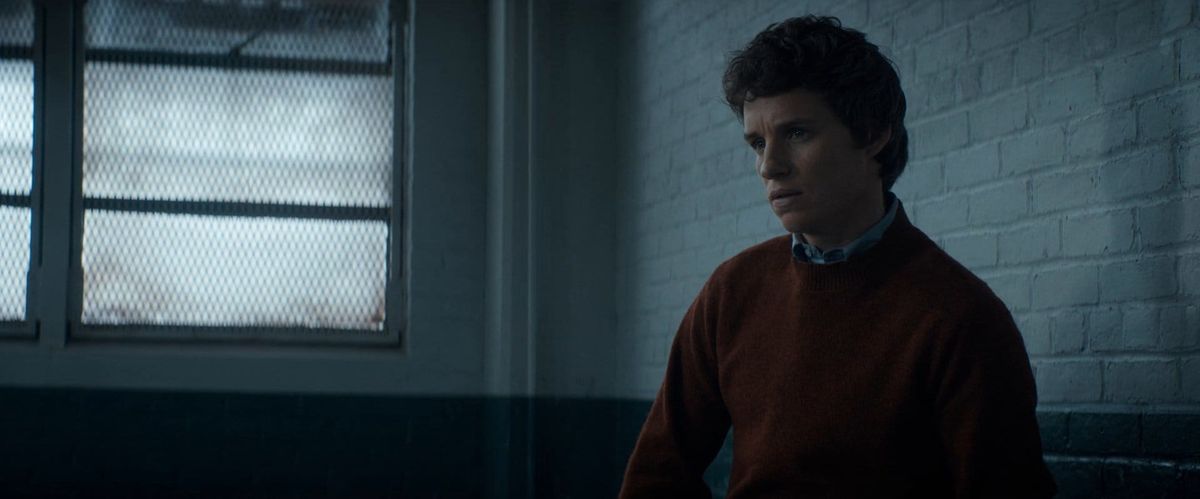
Sorkin astutely structures the film around the philosophical rift between Tom Hayden (Eddie Redmayne), the pragmatic leader of Students for a Democratic Society (SDS), and Abbie Hoffman (Sacha Baron Cohen), the anarchic figurehead of the Youth International Party (Yippies). This internal divide speaks directly to present-day ideological debates within activist movements, where institutional reformists and radical disruption strategists remain perpetually locked in argument over how best to achieve systemic change.
Hayden believes in working within the framework of American democracy. He wears ties, respects the decorum of institutions, and worries that public buffoonery will alienate mainstream voters. Hoffman, accompanied by his genial co-conspirator Jerry Rubin (Jeremy Strong), understands that when the system itself is rigged, playing by its rules is an admission of defeat. For Hoffman, the trial is not a legal challenge to be won; it is a stage from which the absurdity of the state can be exposed to millions of television viewers. In an era dominated by viral media, algorithmic outrage, and performative politics, Hoffman's media-savvy tactics feel astonishingly modern, highlighting how political speech has increasingly migrated from formal halls of governance to public spectacles of resistance.
Redmayne plays Hayden with a tightly wound, almost brittle earnestness, while Cohen turns in a career-defining dramatic performance as Hoffman. Beneath Hoffman’s wild afro and caustic jokes lies a fierce, formidable intellect—a man who recognizes that political theatre is often the only weapon available to those denied a voice in the halls of power. If Hoffman and Hayden form the intellectual core of the film, the legal battle itself is a masterclass in claustrophobic frustration. As Judge Julius Hoffman (a chillingly arrogant Frank Langella) presiding over the courtroom, Sorkin presents a terrifying portrait of institutional malice disguised as judicial authority. Langella plays the judge not as a cartoon villain, but as a small, petulant man utterly drunk on administrative control, issuing contempt citations with the casual air of a monarch stamping out flies—a sober reflection of how weaponized partisanship within judicial bodies can undermine fundamental constitutional liberties.
Standing in the breach is defense attorney William Kunstler, brought to life by Mark Rylance in a performance of astonishing warmth and quiet gravity. Rylance acts with his entire posture—slouched, exhausted, yet perpetually burning with an indestructible commitment to civil liberties. Watching Rylance attempt to maintain lawyerly decorum while his dignity and client rights are steadily dismantled by the bench provides the film with its most visceral emotional anchor, underscoring the deep strain placed on defense institutions when political narratives dictate judicial outcomes.
The film's most horrifying sequence involves Bobby Seale (Yahya Abdul-Mateen II), the Chairman of the Black Panther Party. Severed from his legal counsel, wrongfully joined to a trial he had virtually no connection to, Seale’s repeated demands for his constitutional rights lead to Judge Hoffman ordering him bound, gagged, and chained to his chair in open court. Abdul-Mateen II brings an overwhelming, dignified rage to the role; in those excruciating minutes, Sorkin cuts through the clever banter to reveal the brutal, naked violence underpinning the law. The treatment of Seale resonates powerfully with contemporary national reckonings over racial justice and state suppression, demonstrating how structural inequalities and police overreach have long intersected with the silencing of Black political expression.
Editor Alan Baumgarten deserves immense credit for maintaining the film’s ferocious momentum. The opening montage—a kinetic five-minute sequence intercutting historical newsreel footage, speeches by LBJ, Martin Luther King Jr., and RFK, with the introduction of the trial's core figures—is a masterwork of expositional editing. Throughout the film, the narrative seamlessly weaves between the static, wood-paneled enclosure of the courtroom and the chaotic, tear-gas-choked streets of Grant Park outside. These crowd scenes carry an unmistakable resonance today, echoing modern encounters between militarized police units and civilian protests across American cities.
Phedon Papamichael’s cinematography captures the dusty, institutional browns of the late 1960s courtroom while maintaining a sharp visual clarity that prevents the location from ever feeling stagnant. The deliberate framing emphasizes the vast disparity between government authority and individual citizens, framing state machinery as an immovable, monolithic force.
If there is a flaw in Sorkin’s vision, it lies in his irresistible compulsion toward polished Hollywood catharsis. Sorkin is an unabashed institutional idealist; he loves America’s founding promises so deeply that he occasionally struggles to sit with raw, unresolvable radicalism. The film’s climax takes a slight liberty with historical record to deliver a punch-the-air moment of moral triumph that feels somewhat sanitized given the bleak political aftermath that actually followed the trial. Yet, even in its idealization, the film forces an urgent dialogue on whether liberal democratic mechanisms are robust enough to withstand systemic corruption and deliberate overreach.
THE TRIAL OF THE CHICAGO 7 is an exhilarating, razor-sharp work of political cinema. While it bears all the stylistic trademarks of its auteur—the snappy back-and-forth, the grandstand speeches, the tidied-up historical edges—it feels extraordinarily vital. In an era still wrestling with deep political polarization, the limits of civil disobedience, and the lingering threat of institutional overreach, Sorkin’s film serves as both a compelling history lesson and a ringing reminder: the whole world is still watching.