The wilderness was never meant to be conquered.

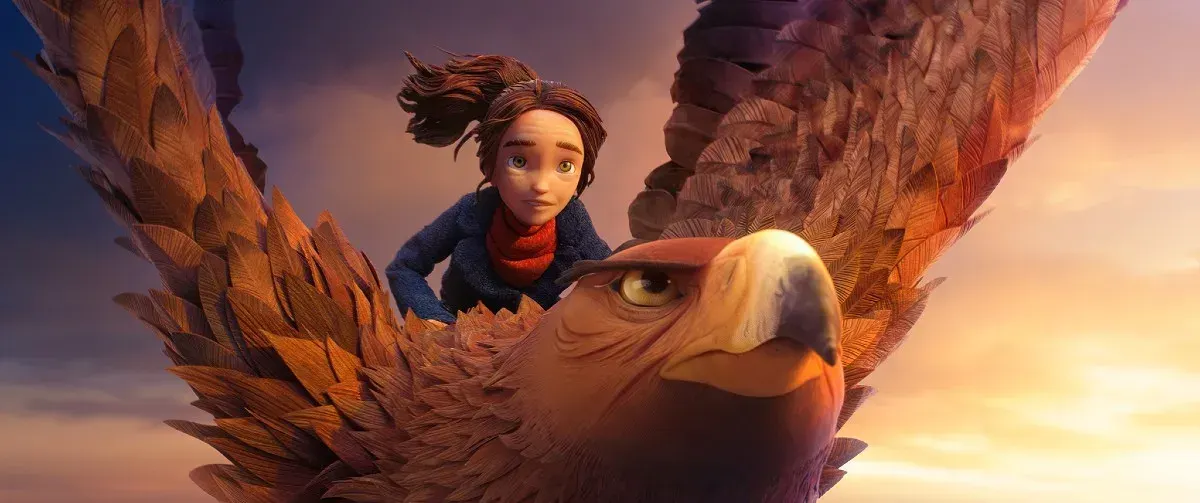
There is something profoundly reassuring about watching a film that reminds us just how extraordinary the human imagination can be when given the time, patience, and resources to flourish. In an entertainment industry increasingly preoccupied with technological convenience, familiar intellectual properties, and the relentless pursuit of commercial efficiency, WILDWOOD feels almost defiant in its existence. Travis Knight's latest stop-motion fantasy is an astonishing achievement of artistic ambition, one whose extraordinary visual imagination is matched by an unmistakable affection for the natural world and the peculiar creatures inhabiting it.
Adapted from Colin Meloy's 2011 novel, illustrated by Carson Ellis, WILDWOOD marks the long-awaited return of LAIKA, the Oregon-based animation studio responsible for CORALINE, PARANORMAN, and KUBO AND THE TWO STRINGS. Knight, who previously directed the latter, approaches the material with the confidence of a filmmaker determined to push an already demanding medium beyond its perceived limitations. The result is a sprawling, frequently breathtaking fantasy adventure that draws upon centuries of folklore and literary tradition without entirely surrendering its own identity.
At the centre of the story is Prue McKeel (Peyton Elizabeth Lee), a young Portland resident whose ordinary existence is violently interrupted when a murder of crows abducts her baby brother, Mac. Accompanied by her somewhat awkward classmate Curtis (Jacob Tremblay), Prue ventures into the Impassable Wilderness, a mysterious forest beyond the familiar boundaries of the city. What begins as a desperate rescue mission gradually develops into an encounter with an entire civilization of competing political interests, ancient grievances, peculiar traditions, and creatures whose motivations are considerably more complicated than their appearances might suggest.
The premise is hardly revolutionary, particularly for audiences acquainted with THE CHRONICLES OF NARNIA, ALICE IN WONDERLAND, or the countless stories in which children discover extraordinary worlds concealed beneath the surface of everyday life. Yet WILDWOOD understands something essential about this tradition: the discovery of another world is meaningful only when that world possesses an existence independent of its visitors. Prue and Curtis are not entering a conveniently assembled playground for their personal development. They are intruding upon a society whose inhabitants have histories, loyalties, prejudices, and problems of their own.
Much of the film's appeal emerges from the sheer conviction with which Knight and his collaborators realize this environment. The wilderness is not merely a picturesque collection of trees populated by talking animals, but an elaborate geographical and political landscape whose individual territories possess distinct personalities. Its settlements, fortifications, pathways, and interiors suggest generations of habitation, while the extraordinary variety of animal characters creates the impression of a world whose inhabitants have somehow developed their own uneasy relationship with civilization.
The craftsmanship is, quite frankly, magnificent. Stop-motion animation has always possessed a tactile quality that even the most sophisticated computer-generated imagery struggles to replicate, and WILDWOOD exploits this distinction with remarkable ingenuity. The textures of fabric, feathers, bark, and foliage are rendered with such meticulous attention that the environment frequently appears almost tangible. Every character seems to occupy a physical space rather than merely existing within a digitally constructed approximation of one, lending even the most fantastical sequences a convincing material presence.
What makes the achievement particularly remarkable is the extraordinary scale of the undertaking. LAIKA has never been a studio content to rest upon its technical accomplishments, but WILDWOOD represents a substantial expansion of its ambitions. The elaborate landscapes and enormous action sequences would be impressive in virtually any animated production, yet their realization through predominantly handcrafted techniques makes them considerably more astonishing. There is an undeniable pleasure in recognizing that the smallest gestures and most elaborate movements alike required painstaking human attention.
Cinematographer Caleb Deschanel contributes enormously to this sense of grandeur, treating the miniature environments with the visual sophistication ordinarily associated with large-scale live-action filmmaking. The camera moves through forests and settlements with an almost effortless fluidity, alternating between intimate compositions and expansive views that emphasize the extraordinary geography of the wilderness. Particularly impressive is the handling of light, which transforms familiar woodland imagery into something alternately inviting, mysterious, and deeply unsettling.
The film's visual language also demonstrates a sophisticated understanding of atmosphere. Its forests are not uniformly beautiful, nor are their darker corners necessarily devoid of wonder. Instead, Knight allows the environment to fluctuate between enchantment and apprehension, reflecting the contradictory emotions that accompany encounters with the unfamiliar. There is an almost primordial quality to certain passages, as though the characters have wandered into a landscape that existed long before humanity began assigning names, boundaries, and explanations to everything within it.
This relationship between humanity and nature becomes one of WILDWOOD's most compelling thematic concerns. The Impassable Wilderness is simultaneously feared, misunderstood, and romanticized by those living beyond its borders, while its inhabitants struggle with their own competing interpretations of belonging. The forest is neither an untouched paradise nor an inherently hostile environment. It is a living, complicated ecosystem whose survival depends upon relationships that cannot always be reduced to simple distinctions between good and evil.
Such ideas inevitably invite comparisons with Hayao Miyazaki, particularly PRINCESS MONONOKE, whose environmental philosophy similarly rejects the notion that nature exists merely to accommodate human ambition. WILDWOOD does not achieve quite the same philosophical complexity, but its interest in ecological interdependence is nevertheless sincere. The natural world is presented as something deserving of respect rather than ownership, and the consequences of attempting to dominate it extend well beyond the immediate interests of any single character.
The film is equally interested in the political structures that emerge within supposedly enchanted societies. Its competing factions possess recognizable systems of authority, conflicting allegiances, and deeply entrenched suspicions, creating an environment where cooperation is frequently undermined by the pursuit of power. The presence of bureaucratic institutions and militarized forces introduces an unexpectedly pointed dimension to the narrative, reminding us that the capacity for political dysfunction is hardly exclusive to human civilization.
There is something amusing, and occasionally rather depressing, about discovering that even a magical forest populated by talking animals cannot escape the absurdities of administration and territorial disputes. WILDWOOD is not especially subtle in its depiction of institutional incompetence, but its satirical observations provide a welcome counterweight to the grandeur of its mythology. Beneath the elaborate costumes and extraordinary creatures lie recognizable anxieties about leadership, collective responsibility, and the consequences of allowing personal ambition to supersede the common good.
Carey Mulligan's Alexandra, the Dowager Governess, provides the film with its most psychologically intriguing presence. Rather than relying exclusively upon the familiar characteristics of a malevolent fantasy antagonist, the character is shaped by an overwhelming grief that has gradually transformed into obsession. Mulligan's performance captures the unsettling contradiction between vulnerability and cruelty, presenting a figure whose emotional suffering remains comprehensible even as her actions become increasingly indefensible.
This distinction is particularly important because WILDWOOD refuses to suggest that personal tragedy automatically confers moral legitimacy. Alexandra's grief may explain her desperation, but it does not excuse the suffering inflicted upon others in pursuit of her desires. The film recognizes how easily love can become possessiveness when accompanied by an unwillingness to accept loss, and how the pursuit of restoration can ultimately become an exercise in destruction.
Mahershala Ali, meanwhile, brings considerable warmth and authority to Brendan, the leader of the forest's bandits. His measured vocal delivery provides an effective contrast to the more theatrical personalities surrounding him, suggesting a character whose understanding of responsibility has been shaped by experience rather than inherited status. Ali possesses the rare ability to communicate moral conviction without making it sound like a lecture, an especially valuable quality in a film whose characters occasionally become burdened by the weight of its mythology.
Angela Bassett lends similar gravitas to the General, a formidable golden eagle whose presence commands attention almost immediately. There is something inherently majestic about the character's design, but Bassett's performance ensures that this authority extends beyond appearances. Richard E. Grant, Tom Waits, Amandla Stenberg, and Tantoo Cardinal contribute to an unusually varied ensemble, while Awkwafina supplies moments of comic relief that generally complement rather than undermine the film's more serious concerns.
Lee and Tremblay are equally effective as the young protagonists, particularly because their characters approach the wilderness from noticeably different perspectives. Prue's determination is inseparable from her sense of responsibility, while Curtis gradually discovers reserves of courage that his initial awkwardness might otherwise conceal. Their development is familiar in broad outline, but the performances provide enough sincerity to prevent their journey from becoming a purely mechanical exercise in conventional coming-of-age storytelling.
Prue is especially interesting because her bravery is not presented as the absence of fear. She is frightened, frequently uncertain, and occasionally overwhelmed by circumstances that would test considerably more experienced individuals. Her determination emerges from the recognition that responsibility sometimes demands action before confidence has had an opportunity to develop. It is a relatively straightforward observation, but one that the film communicates with considerable emotional clarity.
Curtis, by comparison, embodies a quieter form of courage. His transformation is not simply a matter of discovering previously concealed heroism, but of learning to act despite his insecurities and limited understanding of the world around him. The film occasionally relies upon familiar character conventions, yet its treatment of courage remains refreshingly democratic. Heroism is not the exclusive property of the strongest, loudest, or most conventionally impressive individuals.
Another considerable strength is Dario Marianelli's musical score, which provides the adventure with an emotional and atmospheric richness befitting its enormous visual ambitions. Marianelli understands the importance of allowing music to communicate wonder without constantly insisting upon it. His compositions move between delicate passages of discovery and sweeping orchestral expressions of danger, contributing enormously to the sense that the wilderness possesses a history extending far beyond the events unfolding on screen.
The score is particularly effective when the film momentarily abandons dialogue and allows its imagery to communicate the emotional significance of a scene. These passages reveal just how confident Knight can be when trusting the combined expressive power of animation, cinematography, and music. Rather than explaining every emotional development, the film occasionally permits its audience to experience uncertainty and wonder without immediate clarification, producing some of its most affecting moments.
Nevertheless, WILDWOOD is not entirely immune to the difficulties associated with adapting an expansive literary work into a single feature film. At 132 minutes, it is unusually lengthy for an animated adventure, yet there are occasions when the narrative feels paradoxically compressed. The introduction of numerous factions, historical grievances, and supernatural conventions occasionally overwhelms the central emotional journey, leaving certain developments with less room to breathe than they deserve.
This is particularly noticeable during the latter portions, when the film becomes increasingly preoccupied with resolving its elaborate network of conflicts. The resulting spectacle is undeniably impressive, but the accumulation of revelations and confrontations sometimes threatens to reduce the characters to participants in an increasingly complicated narrative mechanism. One occasionally wishes that Knight had permitted the wilderness to remain mysterious for a little longer, rather than attempting to explain so much of its history and internal logic.
The film's extensive mythology also creates an interesting tension between world-building and storytelling. Its environments and inhabitants are so richly conceived that virtually every new location suggests the possibility of another fascinating narrative. Yet the obligation to maintain momentum means that many of these possibilities remain tantalizingly unexplored. WILDWOOD is at its most enchanting when it allows viewers to appreciate the peculiarities of its world, rather than immediately directing their attention toward the next confrontation.
Its relationship with established fantasy traditions is similarly complicated. The influence of Tolkien, C. S. Lewis, and Miyazaki is unmistakable, particularly in the organization of its competing kingdoms, its mystical geography, and its treatment of collective resistance. These comparisons are not inherently detrimental, but they occasionally expose the relative familiarity of the underlying narrative. The film's extraordinary presentation can make conventional developments appear considerably more original than they actually are.
Still, originality should not be confused with the complete rejection of established storytelling traditions. Fairy tales have survived for centuries precisely because their fundamental concerns remain recognizable across different cultures and generations. WILDWOOD draws upon familiar ideas about sacrifice, grief, responsibility, and the struggle between domination and cooperation, but its considerable achievement lies in the conviction and imagination with which these ideas are presented.
The darker elements deserve particular recognition. Knight does not treat animation as an obligation to soften every disturbing implication of his material, and the film's moments of danger possess a genuine sense of consequence. Its treatment of conflict and mortality occasionally feels unusually severe for a production featuring such whimsical character designs, but this contrast is largely appropriate. The wilderness is a place of extraordinary beauty, not a sanctuary exempt from suffering.
Indeed, the film's willingness to acknowledge suffering is essential to its broader understanding of nature. Too often, environmental storytelling reduces the natural world to an idealized alternative to human civilization, as though forests and animals exist beyond the complications of survival, competition, and loss. WILDWOOD is more perceptive than that. Its inhabitants are capable of compassion and cruelty alike, and their relationship with the environment is shaped by the same uncertainties that characterize existence elsewhere.
There is also an appealing resistance to cynicism throughout the film. For all its political disputes, betrayals, and darker revelations, WILDWOOD remains fundamentally committed to the possibility of cooperation. Its characters do not overcome their differences because those differences suddenly cease to exist, but because circumstances demand that they recognize obligations extending beyond their immediate communities. The distinction may appear modest, yet it provides the story with a meaningful ethical foundation.
In this respect, WILDWOOD is as much a story about coexistence as it is about adventure. Its central conflict raises questions about what happens when fear, resentment, and personal suffering become organizing principles of political authority. The film's answer is hardly revolutionary, but it is persuasive in its simplicity: societies cannot endure indefinitely when their inhabitants regard one another exclusively as threats, obstacles, or instruments of personal ambition.
Perhaps the most moving aspect of the entire production, however, exists beyond the narrative itself. There is something deeply appropriate about a film concerned with the preservation of the natural world being brought to life through such an extraordinary investment of human labour. Every miniature environment, carefully constructed puppet, and painstakingly animated movement represents a commitment to craftsmanship that cannot be measured solely through convenience or productivity.
That commitment feels especially significant at a moment when the entertainment industry increasingly treats artistic creation as another process to be accelerated. WILDWOOD demonstrates that technological innovation and traditional craftsmanship need not be mutually exclusive, but it also makes a compelling argument for the value of patience. Its visual sophistication emerges not from eliminating human involvement, but from expanding what dedicated artists can accomplish through their own ingenuity.
None of this means that the film should be exempt from criticism simply because its production was extraordinarily demanding. Technical accomplishment cannot automatically compensate for narrative weaknesses, and WILDWOOD occasionally struggles to reconcile its enormous ambitions with the emotional clarity of its central story. Yet there is a substantial difference between a film overwhelmed by its own imagination and one that possesses remarkably little imagination to begin with.
Knight's achievement belongs firmly to the former category. Even when its storytelling becomes excessively crowded, WILDWOOD remains an absorbing demonstration of what animation can accomplish when treated as an artistic medium without arbitrary limitations. Its greatest sequences possess a sense of scale and physicality that would be remarkable in live action, while its quieter moments remind us that the smallest gestures can communicate emotions no amount of spectacle could adequately replace.
Ultimately, WILDWOOD is a magnificent, occasionally unwieldy celebration of imagination, craftsmanship, and the complicated relationship between living beings and the environments they inhabit. Its narrative may not always possess the elegance of its animation, but its extraordinary visual accomplishments and sincere thematic ambitions make it a deeply rewarding experience. In a cinematic landscape increasingly dominated by familiarity masquerading as innovation, Knight and LAIKA have created something whose very existence feels worth celebrating.
The wilderness may be impassable, but the imagination responsible for bringing it to life knows remarkably few boundaries.