Congratulations to the happy... never mind.

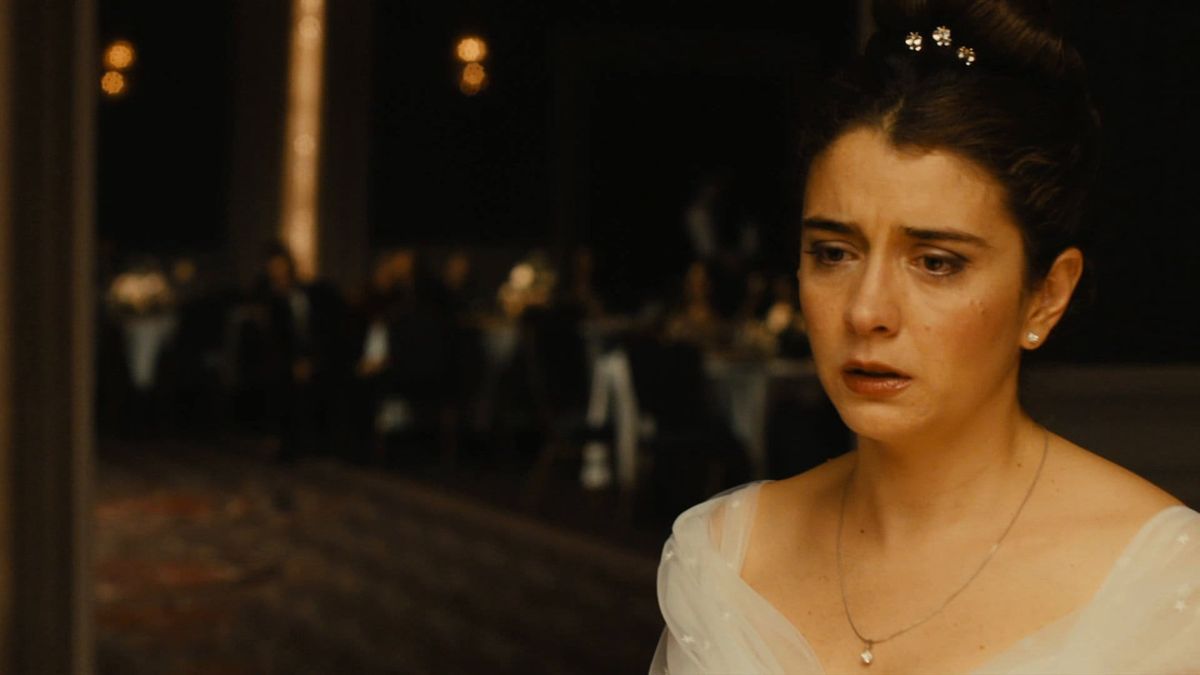
Weddings are built upon performance. Families smile for photographs, friends raise carefully rehearsed toasts and newlyweds promise forever before an audience expecting perfection. UNTIL DEATH DO US PART tears through that performance with merciless honesty, revealing what happens when love, betrayal and pride collide in front of everyone who matters most. Damián Szifron transforms what should have been a joyous celebration into an unforgettable portrait of heartbreak, emotional collapse and survival. The result is one of the richest stories in WILD TALES, proving that the deepest wounds are often inflicted not by strangers, but by those we choose to love.
The revelation that the groom has been unfaithful arrives like a lightning strike, yet Szifron wisely refuses to make infidelity the story's sole focus. Instead, he explores the emotional aftermath with remarkable honesty, exposing how betrayal ripples through every relationship in the room. Family members, friends and complete strangers become unwilling witnesses to an intensely private tragedy, turning a lavish wedding into a stage where every emotion is amplified beneath hundreds of watching eyes.
Érica Rivas delivers an extraordinary performance as Romina, capturing the unpredictable rhythm of profound heartbreak with fearless commitment. Her emotions never move in a straight line. Fury gives way to despair, vulnerability becomes defiance and moments of unexpected tenderness emerge from overwhelming pain. Rivas never asks the audience to excuse her behaviour, only to understand it, creating one of the most compelling and emotionally complex characters in contemporary Argentine cinema.
Diego Gentile is equally impressive as Ariel, portraying a man whose greatest flaw is not cruelty but weakness. He spends much of the story desperately trying to repair damage that cannot be undone, discovering that remorse offers little comfort once trust has been shattered. Gentile resists easy caricature, presenting Ariel as painfully human rather than irredeemable, which makes the collapse of the marriage all the more affecting.
The wedding reception itself becomes an extension of the characters' emotional state. Glittering decorations, elegant music and smiling guests continue to celebrate while the relationship at the centre of it all slowly disintegrates. Szifron repeatedly contrasts beauty with devastation, revealing how easily life's happiest occasions can become its most painful memories. The setting never loses its elegance, yet it gradually feels suffocating as every tradition becomes another reminder of what has been lost.
Humour remains one of the film's greatest strengths, though it emerges from emotional chaos rather than carefully constructed jokes. The absurdity of the escalating situation often invites laughter, only for that laughter to dissolve into sympathy moments later. Few filmmakers understand black comedy as instinctively as Szifron, who recognises that people frequently laugh not because suffering is amusing, but because overwhelming emotion leaves them searching for any kind of release.
Visually, UNTIL DEATH DO US PART possesses an infectious energy that mirrors the volatility of its characters. The camera moves effortlessly through crowded dance floors, banquet halls and balconies, immersing the audience within the celebration instead of observing it from a distance. Every movement reinforces the feeling that events are spiralling beyond anyone's ability to restore order, while the vibrant setting makes the emotional devastation feel even more profound.
Beneath its spectacular emotional fireworks lies a surprisingly compassionate understanding of love. Szifron refuses to present relationships as either perfect or hopeless. Instead, he embraces their contradictions, acknowledging that devotion can coexist with anger, tenderness with resentment and forgiveness with lingering pain. The story recognises that genuine intimacy is rarely simple, and that the people we love most often possess the greatest capacity to hurt us.
The ending is as daring as it is unforgettable. Rather than offering easy closure or comforting certainty, Szifron embraces emotional ambiguity, allowing the characters to confront one another without illusion or pretence. Their journey reaches a conclusion that feels simultaneously tragic, liberating and strangely hopeful, suggesting that love is not defined by perfection but by the willingness to face even its ugliest truths.
As the anthology's closing story, UNTIL DEATH DO US PART feels like the culmination of everything that comes before it. Every preceding chapter examines people pushed beyond the limits of reason, but this finale discovers something deeper beneath the chaos. Damián Szifron concludes WILD TALES not with vengeance alone, but with the uncomfortable truth that love can be just as irrational, destructive and enduring. It is a breathtaking finale that elevates an exceptional anthology into a modern masterpiece.