Everyone pays eventually.

Death arrives long before the tragedy truly begins. THE PROPOSAL, the fifth story in WILD TALES, opens with a fatal hit-and-run, but the collision itself is only the catalyst for something far more devastating. Damián Szifron is less interested in the crime than in the moral collapse that follows, examining how fear, privilege and desperation quietly dismantle every principle the characters once believed they possessed.
Unlike the anthology's explosive tales of revenge, THE PROPOSAL unfolds with agonising restraint. There are no spectacular confrontations or uncontrollable outbursts. Instead, every conversation becomes another step away from decency. The tension grows not because events spiral beyond control, but because every participant remains painfully aware of exactly what they are sacrificing. That awareness makes the story profoundly unsettling.
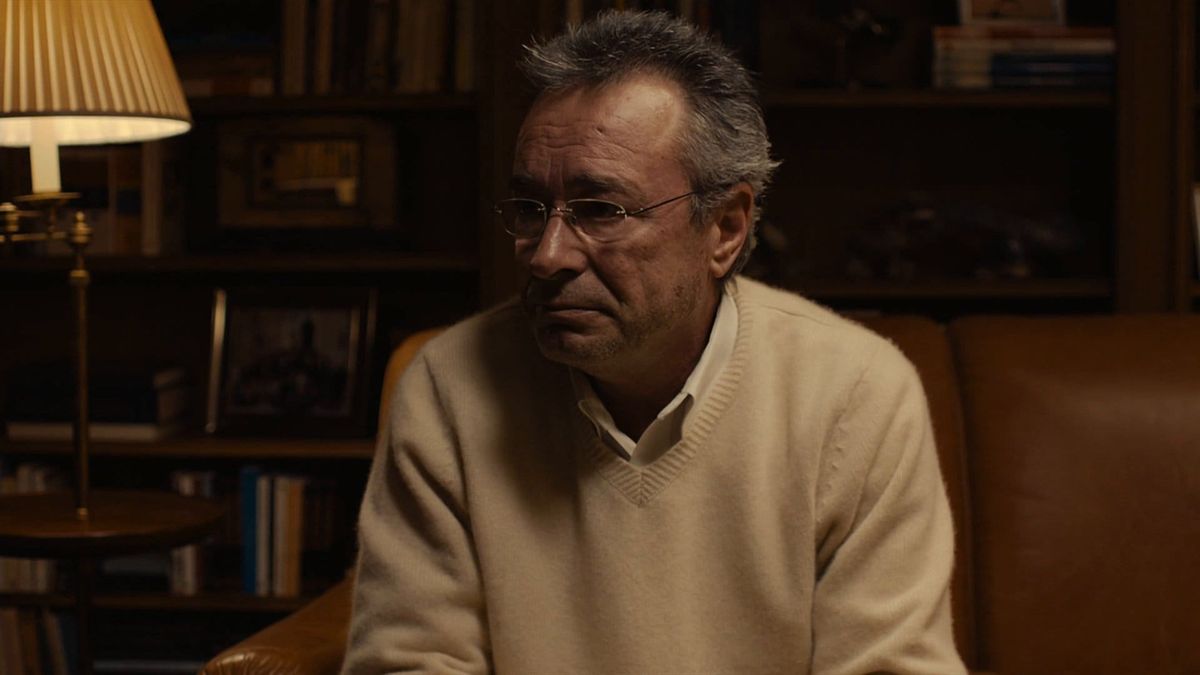
Oscar Martínez delivers one of the anthology's finest performances as a father determined to protect his son at any cost. He never portrays the character as cruel or inherently corrupt. Instead, Martínez reveals a man whose love gradually blinds him to the consequences of his choices. Every compromise is made with sincere conviction, making his moral deterioration all the more heartbreaking to witness.
The supporting cast deepens the tragedy by refusing simple definitions of innocence or guilt. Each character enters believing there is a line that cannot be crossed, only to discover that fear, money or opportunity slowly redraws it. Nobody embraces corruption overnight. It advances quietly, one concession at a time, until the people involved scarcely recognise the principles they defended only hours earlier.
Money dominates every conversation without ever becoming the story's true subject. Currency merely exposes values that already existed beneath the surface. Loyalty becomes negotiable. Responsibility acquires a market price. Even grief begins to resemble another asset waiting to be exchanged. Szifron presents wealth not as evil itself, but as a force capable of revealing the uncomfortable fragility of human integrity.
What distinguishes THE PROPOSAL is its remarkable patience. Szifron never forces dramatic revelations or emotional speeches upon the audience. Instead, silence becomes one of his most powerful storytelling tools. A hesitant glance across a room or a conversation interrupted by uncertainty often carries greater emotional weight than any confession could. The restraint allows every ethical compromise to resonate long after it occurs.
Visually, the film mirrors its emotional landscape. Spacious rooms and immaculate interiors project wealth, stability and control, yet every carefully composed frame conceals growing moral chaos. The elegant surroundings become prisons of respectability where appearances must be preserved regardless of the emotional devastation unfolding beneath them. The contrast between beauty and corruption proves quietly haunting.
Perhaps the story's greatest achievement is its refusal to provide anyone with genuine victory. Even those who appear to benefit emerge diminished by the choices required to reach that point. Justice becomes obscured, innocence disappears and guilt settles across every participant with equal weight. The tragedy is not simply that terrible decisions are made, but that they become increasingly impossible to avoid.
Beneath its elegant construction lies a deeply compassionate understanding of human weakness. Szifron recognises that extraordinary moral failures often begin with ordinary love. A parent wants to protect a child. An employee needs financial security. Another person sees an opportunity that seems impossible to refuse. Each motivation is understandable in isolation. Together, they create a devastating portrait of collective ethical collapse.
THE PROPOSAL may be the quietest story in WILD TALES, but it is also among its most emotionally shattering. Rather than depicting revenge as explosive or triumphant, Damián Szifron presents moral compromise as a slow erosion of the soul, leaving behind people who survive their ordeal without truly escaping it. It is a profoundly tragic meditation on conscience, responsibility and the unbearable price of believing that everything can be bought.