Everyone knows a Pasternak.

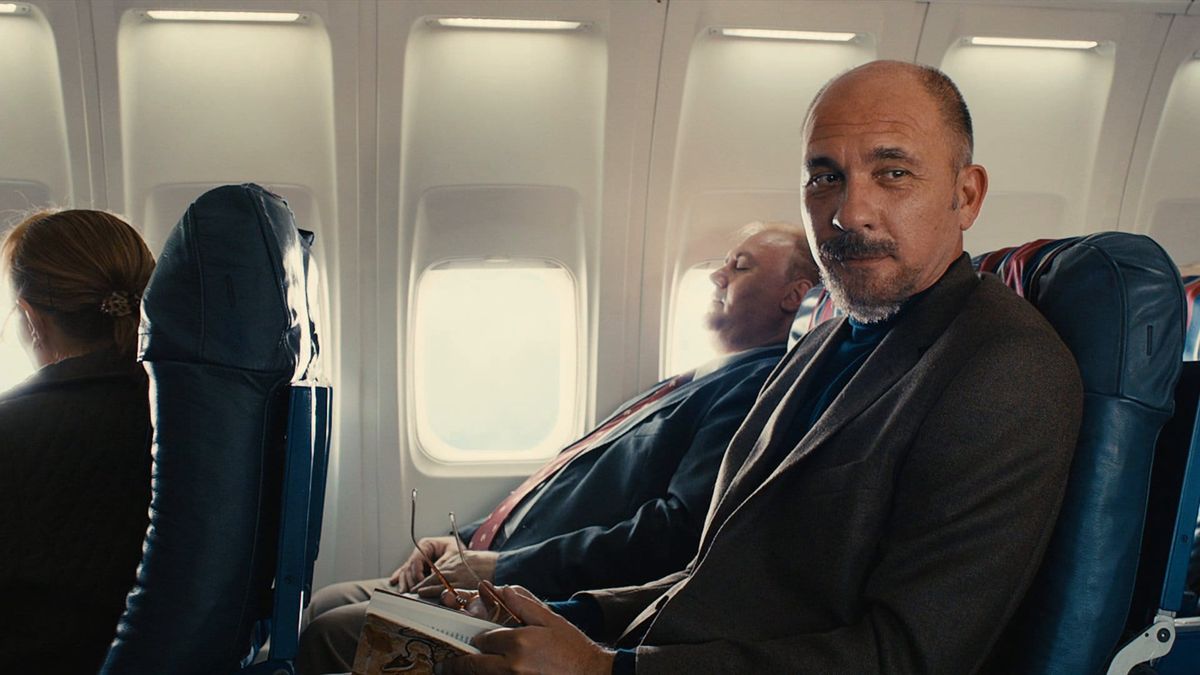
Some films require three hours to leave an unforgettable impression. PASTERNAK accomplishes the feat before most passengers have finished fastening their seatbelts. As the opening chapter of WILD TALES, Damián Szifron announces his intentions with astonishing confidence, crafting a self-contained short film that functions equally as a wicked piece of black comedy, a nerve-shredding thriller and a devastating study of accumulated resentment.
It is an extraordinary way to begin an anthology because it immediately convinces the audience that absolutely anything can happen, and that ordinary life is only a few unfortunate coincidences away from descending into complete madness.
The premise could hardly be more unassuming. A music critic and a former model strike up a conversation aboard a commercial flight and discover they both knew a man named Gabriel Pasternak. At first, the coincidence is amusing. Then another passenger joins the discussion. Then another. Every casual recollection introduces yet another connection to the same forgotten individual, transforming harmless conversation into an increasingly unnerving chain of revelations.
Szifron understands that suspense does not always emerge from action. Sometimes it is born from curiosity alone, allowing dialogue to do the heavy lifting until the audience finds itself desperately assembling the same horrifying puzzle as the passengers.
What makes PASTERNAK such a remarkable piece of screenwriting is the precision of its escalation. Every revelation feels both surprising and inevitable because each one naturally expands upon the last. Nothing is wasted. Every sentence has purpose. Every coincidence raises the emotional stakes without ever feeling contrived, despite the increasingly outrageous premise.
Lesser filmmakers might have rushed toward the punchline, but Szifron displays remarkable patience, carefully tightening the screws until the atmosphere becomes almost unbearable. The segment unfolds with the inevitability of fate, leaving the audience with the unsettling feeling that events were set in motion long before the aircraft ever left the runway.
The film's greatest balancing act is its ability to remain riotously funny while simultaneously becoming more frightening with every passing minute. The comedy is never built upon jokes but upon absurdity itself. Each new revelation becomes so wildly improbable that laughter feels like the only possible response, yet that laughter gradually gives way to discomfort as the implications become impossible to ignore.
Few filmmakers understand the relationship between humour and tension as instinctively as Szifron. Rather than undermining one another, the two emotions feed each other, creating an experience that is as exhilarating as it is deeply unsettling.
The ensemble cast deserves enormous credit for selling such an audacious concept. Darío Grandinetti, María Marull and the supporting players never behave as though they are participating in an elaborate cinematic puzzle. Instead, they perform with complete naturalism, allowing panic to emerge organically as the truth slowly reveals itself. Their restrained performances make every discovery feel authentic, ensuring that the audience accepts even the story's most outrageous turns. Nobody attempts to dominate the screen because every passenger represents another essential piece of the same tragic mosaic.
Perhaps the segment's most fascinating achievement is its portrayal of Gabriel Pasternak himself. For much of the film, he exists only through the memories of others. Former lovers, teachers, critics and acquaintances unknowingly reconstruct an entire human life without ever intending to do so. Every anecdote adds another scar, another humiliation, another rejection.
By the time Pasternak truly enters the narrative, he has already become one of the most vividly imagined unseen characters in recent cinema. His absence paradoxically becomes his greatest presence, allowing the audience to understand the depth of his pain long before they ever confront its terrifying consequences.
Visually, PASTERNAK is an exercise in elegant restraint. The camera rarely calls attention to itself because it has no need to. The aircraft cabin provides all the tension the film requires, becoming increasingly claustrophobic with every revelation. Faces replace spectacle. Expressions replace action.
Meanwhile, the editing deserves recognition as one of the segment's quiet masterpieces, maintaining a conversational rhythm that gradually transforms into relentless psychological pressure. By refusing unnecessary stylistic flourishes, Szifron allows the screenplay and performances to command every moment of the audience's attention.
Beneath the deliciously twisted premise lies an observation that feels surprisingly universal. Almost everyone has unknowingly become a minor character in somebody else's defining memory. An offhand insult, an unfair criticism, a failed romance or a thoughtless dismissal may disappear entirely from one person's consciousness while remaining permanently etched into another's.
PASTERNAK imagines the impossible scenario in which every forgotten wound converges at precisely the same moment. Its revenge is grotesquely exaggerated, yet the emotions driving it remain painfully recognisable. That uncomfortable truth is what elevates the segment beyond mere cleverness and transforms it into something genuinely haunting.
Many anthology films struggle to justify their format, presenting one memorable story surrounded by lesser companions. PASTERNAK immediately proves that WILD TALES will be different. In barely ten minutes, Szifron demonstrates extraordinary command over pacing, structure, character and tone, delivering an opening that would remain unforgettable even if it existed entirely on its own.
It is not simply one of the finest anthology openers ever made. It is one of the greatest short films of the twenty-first century, a perfectly calibrated explosion of wit, suspense and human fury that announces, from its very first conversation, that this flight is heading somewhere no audience could ever anticipate.