Taste is never an accident.

RATATOUILLE is a beautiful reminder that greatness can emerge from the most unexpected places. Brad Bird transforms a seemingly impossible premise about a rat who dreams of becoming a chef into one of Pixar’s richest explorations of creativity, identity, and the courage required to follow passion.
What begins as an unlikely comedy gradually reveals itself as something far more profound: a celebration of artistry, perseverance, and the belief that extraordinary talent is never confined by background, appearance, or expectation.
The film's emotional power comes from the sincerity with which it embraces Remy's dream. He is not driven by fame or recognition but by an irresistible desire to create something meaningful.
Cooking becomes his language, his purpose, and ultimately his way of understanding the world. Rather than mocking his ambitions, the film treats them with remarkable respect, allowing audiences of every age to appreciate what it means to dedicate oneself completely to a craft.
That sincerity extends throughout the entire cast. Linguini is more than comic relief; he is an insecure young man learning to trust both himself and those around him. Their unusual partnership evolves into one of Pixar's most charming friendships because it is built on mutual dependence rather than convenience. Each possesses strengths the other lacks, and together they become something neither could have achieved alone.
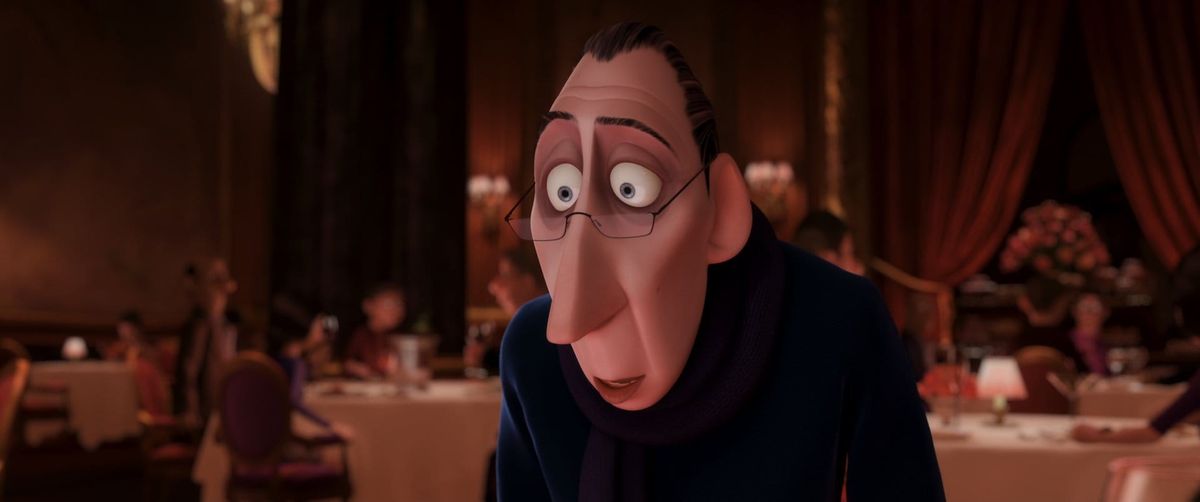
The genius of the film is how seriously it treats art. Remy's love for food is not presented as a joke but as a genuine calling, while Anton Ego's journey captures the vulnerability of criticism and the responsibility that comes with judging another person's work.
His famous realization that criticism is easy while creation demands courage remains one of the most insightful reflections on artistic expression ever written for an animated film. It is a lesson that resonates just as strongly with writers, painters, musicians, filmmakers, and critics as it does with chefs.
Anton Ego himself stands among Pixar's greatest characters because he is allowed genuine complexity. He enters the story as an intimidating figure whose opinion can make or destroy careers, yet the film never reduces him to a simple antagonist. Beneath his icy exterior lies someone who once loved food deeply before cynicism replaced wonder.
His final review is not merely praise for Remy's cooking but an acknowledgement that true art has the power to humble even those who believe they have seen everything.
The supporting cast enriches the world without ever distracting from its central ideas. Colette embodies discipline, professionalism, and resilience in an industry that has rarely welcomed women on equal terms. Skinner provides energetic comic tension without becoming overwhelming, while the spirit of Auguste Gusteau lingers over the narrative as a symbol of optimism and possibility. Even the rat colony contributes meaningfully by illustrating the tension between safety and ambition, reminding us that pursuing excellence often requires stepping beyond familiar expectations.
Visually, RATATOUILLE remains one of Pixar's most elegant achievements. Paris feels vibrant without becoming an idealized postcard, balancing romantic beauty with bustling kitchens, rainy rooftops, crowded streets, and hidden alleyways.
The filmmakers immersed themselves in the city's atmosphere and culinary culture, giving the environments an authenticity that makes every location feel lovingly observed rather than merely recreated.
The animation itself is extraordinary. Every ingredient, every simmering sauce, every slice of bread, and every carefully plated dish reflects astonishing craftsmanship. Cooking is transformed into choreography, with knives, pans, steam, and movement flowing together like dance.
Yet despite the technical brilliance, the film never mistakes visual spectacle for emotional substance. Every beautiful image serves the larger story of people discovering purpose through creation.
Michael Giacchino's magnificent score completes that experience. Overflowing with warmth, elegance, and unmistakable Parisian character, the music moves effortlessly between playful comedy and heartfelt emotion.
Themes like "Le Festin" capture the film's gentle optimism while elevating moments that might otherwise have passed quietly. Few Pixar scores feel so inseparable from the identity of the world they accompany.
Perhaps what makes RATATOUILLE endure most is its generosity toward everyone it depicts. It believes people can change, critics can rediscover wonder, artists can emerge from obscurity, and greatness can exist where society refuses to look.
The famous declaration that "not everyone can become a great artist, but a great artist can come from anywhere" is not simply the film's central message; it is its philosophy. It invites audiences to reconsider every assumption they hold about talent, success, and belonging.
Nearly two decades after its release, RATATOUILLE remains among Pixar's finest achievements because it understands that talent has no predetermined origin. It is not simply a story about chasing dreams, but about creating a world where unusual voices are given the chance to prove they belonged there all along.
Like the perfect meal, it leaves behind something lasting: comfort, inspiration, and the quiet conviction that passion, when nurtured with courage and generosity, can transform even the most unlikely life into something extraordinary.