Acquire the spirit of peace.

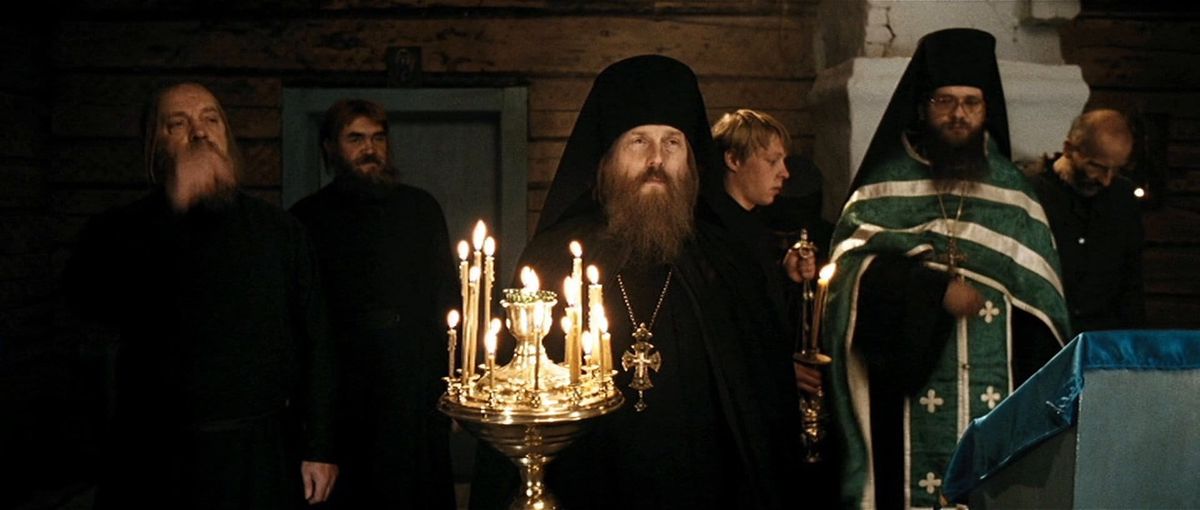
THE ISLAND (OSTROV) is one of the rare films that understands redemption as a lifelong practice rather than a single transformative moment. Pavel Lungin's remarkable drama rejects spectacle in favour of quiet spiritual introspection, telling the story of Father Anatoly, a monk haunted by an act committed during the Second World War. His journey is not one toward absolution already earned, but toward learning whether forgiveness can truly be accepted when the greatest obstacle is oneself.
What makes the film so compelling is its refusal to separate faith from ordinary life. Prayer, labour, silence, humour and compassion exist alongside exhaustion, doubt and guilt. The monastery never feels like an escape from the world. Instead, it becomes a place where the world's deepest wounds continue to echo, demanding patience rather than easy answers.
Pyotr Mamonov delivers one of the most extraordinary performances in modern cinema. His Anatoly appears eccentric, unpredictable and even mischievous, yet beneath every unusual gesture lies profound humility and unbearable remorse. Mamonov avoids portraying holiness as perfection. Instead, he reveals a man who has spent decades confronting his own failures, finding grace not through certainty but through relentless honesty.
Pavel Lungin directs with remarkable restraint. There are no manipulative emotional crescendos or grand speeches announcing the film's themes. Every conversation unfolds naturally, allowing viewers to discover meaning through observation rather than explanation. The pacing encourages contemplation, rewarding patience with moments of extraordinary emotional clarity.
The isolated northern landscape becomes another character entirely. Endless water, weathered wooden buildings, snow-covered shores and muted skies create an environment suspended between earth and eternity. The monastery feels detached from modern time, existing instead within a spiritual rhythm measured by prayer, changing seasons and quiet acts of service.
Visually, THE ISLAND (OSTROV) embraces simplicity without sacrificing beauty. Natural light fills modest interiors with warmth, while long takes encourage viewers to inhabit each moment alongside the monks. Nothing feels artificially composed, yet every frame reflects remarkable care. The understated cinematography mirrors the film's central belief that profound truths often reveal themselves through ordinary experiences.
One of the film's greatest strengths is its understanding of humility. Anatoly never presents himself as morally superior, despite others increasingly recognising his spiritual gifts. Every miracle, every insight and every act of compassion emerges from someone who remains painfully aware of his own shortcomings. The result is a portrait of faith grounded in self-examination rather than self-righteousness.
The supporting cast enriches this spiritual landscape by representing different responses to belief. Viktor Sukhorukov's compassionate Father Philaret embodies disciplined leadership and quiet pastoral wisdom without judgment, while Dmitri Dyuzhev's Father Job wrestles with pride, envy and spiritual immaturity. Beyond the monastery walls, the pilgrims who seek out Anatoly arrive burdened by grief, illness, uncertainty and hope, each searching for something different. Together, their interactions with Anatoly reveal that faith is never experienced identically, but is always filtered through individual fears, aspirations and imperfections, reminding us that the spiritual journey is deeply personal rather than universally shared.
There is also unexpected humour woven throughout the film. Anatoly's playful behaviour frequently disarms both fellow monks and visitors, reminding us that genuine spirituality need not be solemn at every moment. These lighter scenes make the film feel profoundly human, preventing its philosophical reflections from becoming distant or inaccessible.
Ultimately, THE ISLAND (OSTROV) asks one of the most difficult questions imaginable: can a person truly accept forgiveness after committing the unforgivable? Rather than offering a definitive answer, Lungin suggests that redemption is found not in forgetting the past but in allowing compassion to transform how one lives with it.
It is a demanding, deeply moving film that lingers long after its final image, standing among the most sincere cinematic explorations of repentance, mercy and hope ever made.