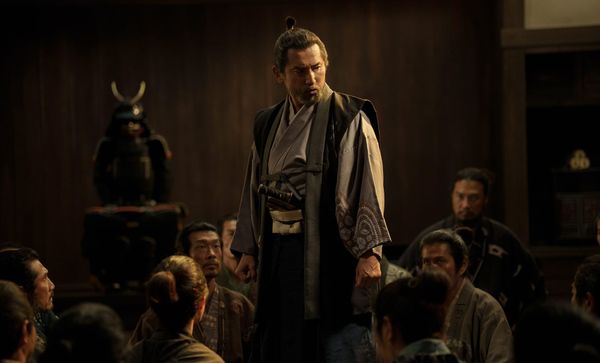
Beauty as a death sentence.

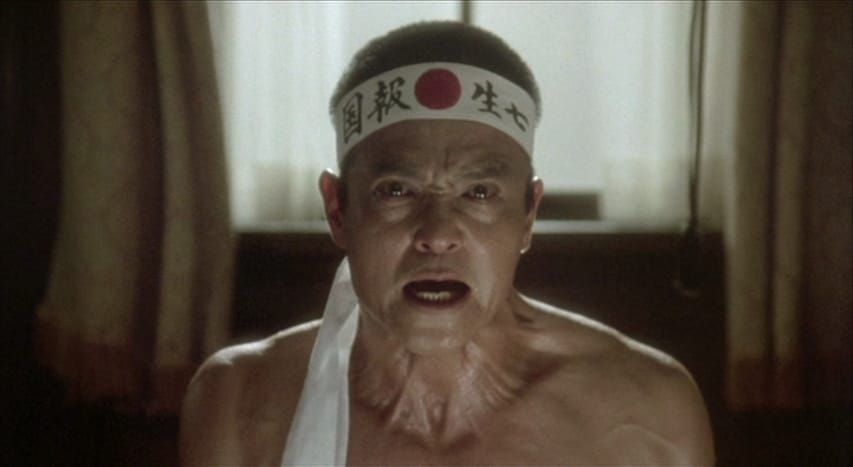
MISHIMA: A LIFE IN FOUR CHAPTERS is one of the rare biographical films that understands some people cannot be explained. They can only be interpreted. Rather than tracing Yukio Mishima's life through familiar milestones, Paul Schrader constructs a portrait that is equal parts biography, mythology, and psychological study.
The film follows three interconnected threads: Mishima's final day, key moments from his life, and stylized adaptations of several of his novels. What sounds complicated on paper unfolds with remarkable clarity, gradually revealing the increasingly thin line between the artist, his work, and the persona he created.
The novels become autobiography. The autobiography becomes performance. The performance becomes destiny. Schrader is less interested in documenting events than exploring how Mishima transformed himself into a living work of art, blurring the boundaries between literature, politics, public image, and private belief.
That approach allows the film to avoid many of the pitfalls that plague conventional biographies. There is little interest in providing definitive answers or simple explanations. Instead, Schrader embraces contradiction, presenting a man whose brilliance, ambition, vanity, discipline, and self-destructive tendencies existed simultaneously and often reinforced one another.
Much of the film's power comes from its visual imagination. The literary sequences abandon realism entirely, embracing theatrical sets, vivid colours, and dreamlike compositions. Production designer Eiko Ishioka transforms Mishima's fiction into something tangible, creating some of the most striking imagery of the 1980s.
The film's artificiality is its greatest strength. Rather than attempting to recreate reality, Schrader constructs emotional and psychological spaces. The result feels less like watching a historical drama and more like stepping directly into the imagination of its subject, where ideas and symbols matter as much as events.
Philip Glass's score is equally essential. Its hypnotic rhythms give the film an almost operatic quality, pulling viewers deeper into Mishima's world. Few film scores feel this inseparable from the images they accompany, and fewer still leave such a lasting impression.
Combined with John Bailey's elegant cinematography, the music creates a sense of momentum that carries the film through its most reflective passages. Even moments of stillness feel charged with purpose, as though everything is moving toward a conclusion that has already been written.
At its centre is Ken Ogata's remarkable performance. He captures both the discipline and the contradictions that defined Mishima without reducing him to a simple historical figure. Charismatic, obsessive, intelligent, and deeply troubled, he emerges not as a hero or villain, but as a man consumed by ideals he could never fully attain.
Ogata's greatest achievement is his restraint. Rather than inviting sympathy or condemnation, he allows viewers to sit with Mishima's complexity. The performance reflects the film's broader philosophy: understanding a person does not necessarily mean agreeing with them, nor does fascination require approval.
The film also occupies a fascinating place within Schrader's career. Like many of the filmmaker's most memorable protagonists, Mishima is a man pursuing purity in a world he perceives as compromised. His search for permanence and meaning becomes increasingly consuming, turning conviction into obsession.
What makes MISHIMA endure is its refusal to simplify its subject. Schrader recognizes both the brilliance and the danger of Mishima's worldview without reducing him to either. The film understands that exceptional individuals are often defined as much by their contradictions as their accomplishments.
Rather than explaining Yukio Mishima, the film immerses us in his obsessions: beauty, identity, mortality, discipline, and permanence. It asks difficult questions about the relationship between art and life, and whether the pursuit of an ideal can ever be separated from the sacrifices it demands.
It is a bold and unconventional biography that succeeds precisely because it embraces ambiguity. Decades after its release, MISHIMA: A LIFE IN FOUR CHAPTERS remains intellectually engaging, visually extraordinary, and wholly unlike any other film of its kind.