You don’t preserve art without breaking people.

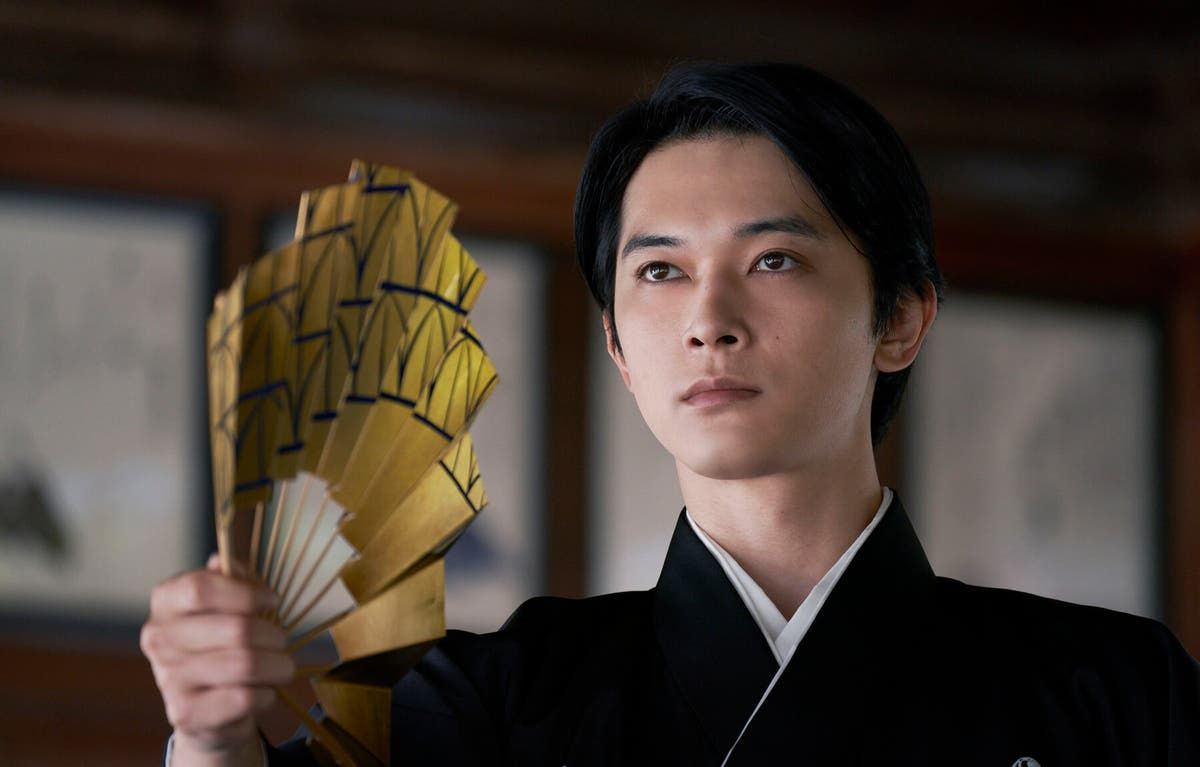
KOKUHŌ is not really about performance. It is about preservation — the kind that slowly hardens into obligation, then hierarchy, then sacrifice. What Lee Sang-il’s film ultimately examines is the cost of turning culture into inheritance: who gets permitted to embody tradition, who gets consumed by it, and how institutions survive by convincing people that self-erasure is a form of devotion.
The kabuki setting matters, but less as spectacle than as structure. Strip away the makeup, the stagecraft, the period detail, and KOKUHŌ reveals itself as a film about systems that demand total submission while calling that submission beauty.
That distinction is important because the film consistently resists the easy seduction of “art demands suffering” mythology. KOKUHŌ is too attentive to labor for that. The film understands kabuki as discipline before transcendence — repetition, physical exhaustion, inherited expectation, financial pressure, social gatekeeping.
Kikuo’s rise is not framed as liberation through talent so much as assimilation through endurance. As the son of a yakuza family entering a world obsessed with lineage and legitimacy, he becomes both participant in and victim of an institution built around controlled continuity. The tragedy is not simply that he sacrifices himself for art. It is that the system rewards him most when there is less and less of himself remaining.
Ryō Yoshizawa’s performance is extraordinary precisely because of how withheld it is. He avoids the broad emotional signaling that films about artistic obsession often rely on. Instead, he builds Kikuo through gradual compression. His posture stiffens. His speech slows. His face becomes harder to read scene by scene.
Yoshizawa plays the role as a man teaching himself how to disappear into ritualized precision, and the film smartly treats that transformation with unease rather than admiration.
Across from him, Ryusei Yokohama gives Shunsuke an emotional volatility that prevents the rivalry from collapsing into familiar prestige-drama binaries. Their relationship never settles into brotherhood, resentment, affection, or competition completely. It moves uneasily between all four states at once.
That instability gives the film its emotional intelligence. KOKUHŌ understands that institutions often weaponize intimacy by forcing personal connection into systems of succession and legitimacy. Love becomes competitive. Loyalty becomes transactional. Even moments of tenderness carry the pressure of performance underneath them.
The film’s emotional architecture depends on this tension, and Lee Sang-il directs with enough patience to let it accumulate gradually rather than announcing it outright.
Formally, the film is remarkably disciplined. At nearly three hours, KOKUHŌ moves with deliberate slowness, but not indulgence. Lee’s pacing creates a sense of ritual repetition that mirrors the lives being depicted. Scenes frequently extend beyond narrative efficiency into something closer to observation.
Rehearsals repeat. Gestures are corrected. Silence lingers uncomfortably long. The editing rhythm favors accumulation over momentum, allowing exhaustion to become part of the viewing experience itself. Rather than using kabuki performance as ornamental release, the film frames it as laborious physical and emotional construction.
Visually, the film avoids the polished exoticism that often flattens traditional Japanese arts cinema for international audiences. The backstage environments feel cramped, overused, functional. Makeup rooms are lit with exhaustion rather than mystique.
Sofian El Fani’s cinematography consistently contrasts the rigid beauty of staged performance with the emotional isolation required to sustain it. Wide theatrical compositions emphasize collective discipline, while close-ups reveal strain beneath the precision. Even the film’s most beautiful sequences carry an undertone of depletion.
What makes KOKUHŌ especially compelling within the broader landscape of contemporary prestige cinema is its refusal to convert cultural tradition into inspirational uplift. Many films about legacy arts ultimately reassure audiences that preservation itself is inherently noble. Lee’s film is more conflicted than that.
It respects kabuki deeply while remaining attentive to the damage demanded by its structures. The film never mocks tradition, but neither does it romanticize the human cost attached to maintaining it. That moral tension gives the work its seriousness.
There are moments where the film risks becoming overly schematic in its generational parallels, particularly in the later sections where symbolic inheritance occasionally threatens to overtake lived emotion. A few narrative turns feel shaped more by thematic symmetry than by organic character behavior.
Yet even here, Lee’s restraint largely prevents the film from collapsing into self-importance. KOKUHŌ remains grounded because it keeps returning to bodies: aging bodies, disciplined bodies, exhausted bodies shaped by ritual and expectation.
By the end, the film stops functioning as a conventional rise-and-fall drama and becomes something closer to an elegy for the idea of artistic immortality itself. KOKUHŌ does not conclude with triumph, catharsis, or condemnation. Instead, it arrives at a quieter and more unsettling recognition: institutions survive because individuals allow themselves to be consumed by them, often willingly, often beautifully.
The film leaves open the question of whether that sacrifice represents devotion, exploitation, or something impossible to separate cleanly into either category. That ambiguity is not evasiveness. It is the film’s central honesty.