Grief finds its voice in song.

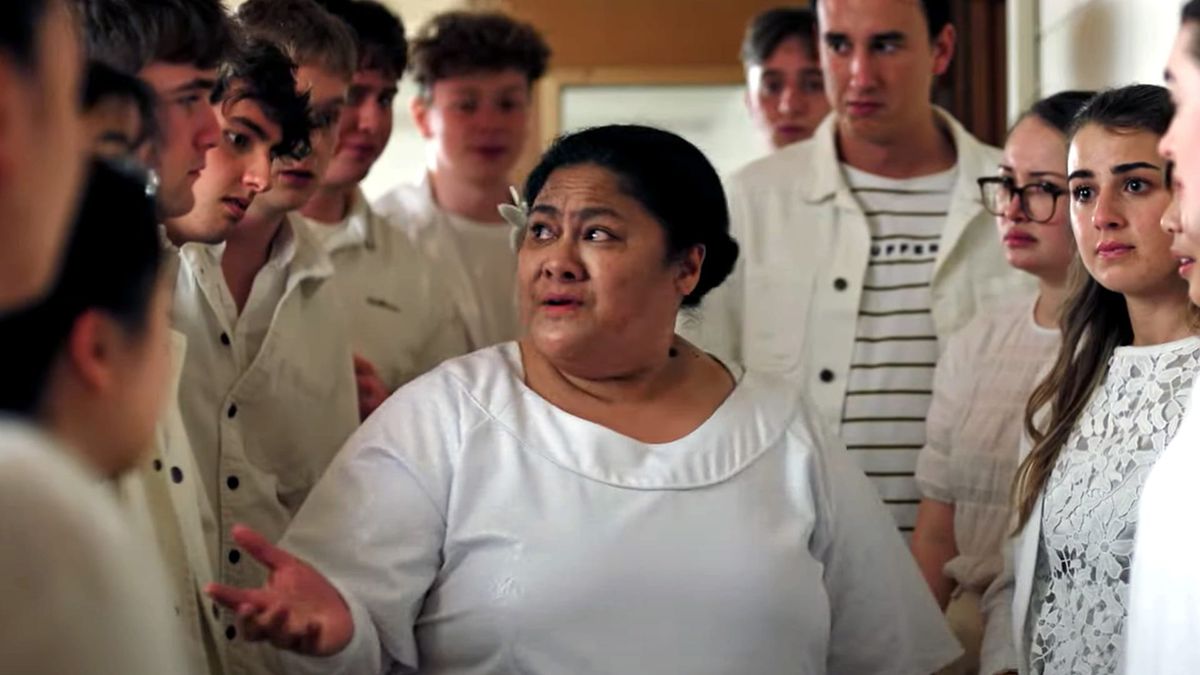
TINĀ is a moving and deeply human drama that explores loss, community, and cultural identity through the transformative power of music. Director Miki Magasiva crafts a story that is emotionally resonant without becoming sentimental, allowing its characters to feel authentic even in its most uplifting moments.
One of the film's most compelling qualities is its portrayal of mentorship. Mareta's influence extends beyond the classroom, encouraging her students to discover confidence, discipline, and a sense of belonging through music. The relationships she develops feel genuine and earned, demonstrating how teachers can shape lives in ways that extend far beyond academic achievement.
At the centre of the film is Mareta Percival, played with remarkable warmth and conviction by Anapela Polataivao. Following a devastating personal tragedy, Mareta finds herself navigating profound grief while attempting to rebuild a sense of purpose. Her journey forms the emotional backbone of a film that understands healing as a gradual and often imperfect process.
Rather than focusing solely on individual suffering, TINĀ examines the ways communities carry one another through hardship. Relationships between students, teachers, families, and neighbours become essential to the film's emotional fabric. The screenplay recognizes that recovery rarely happens in isolation and that belonging can be as important as resilience.
Music serves as both a narrative device and a source of emotional expression. The choral performances are beautifully integrated into the story, functioning as extensions of character and feeling rather than interruptions to the drama. Each musical moment deepens the themes of connection, remembrance, and hope that run throughout the film.
One of TINĀ's greatest strengths is its depiction of culture. Samoan traditions and values are woven naturally into the narrative, enriching the story without reducing them to exposition or symbolism. The film celebrates cultural identity as a living, evolving force that shapes how people understand family, grief, and responsibility.
The film's treatment of grief is equally effective because it avoids reducing loss to a single emotional state. Mareta's journey encompasses sadness, anger, isolation, humour, and resilience, often within the same scene. By acknowledging the complexity of mourning, TINĀ presents healing as an ongoing process rather than a clearly defined destination.
The film is also shaped by the legacy of the 2011 Christchurch earthquake, one of the most significant events in modern New Zealand history. Without losing sight of its characters, TINĀ acknowledges the lasting impact that collective tragedy can have on individuals and communities alike. The disaster serves as a reminder that grief is often experienced not only on a personal level, but also as a shared social experience.
Visually, the film adopts an understated approach that allows the performances to remain at the forefront. There are no grand stylistic flourishes competing for attention. Instead, the camera stays close to its characters, emphasizing emotion through observation rather than manipulation.
Polataivao's performance anchors every scene. She conveys sorrow, humour, frustration, and determination with equal credibility, creating a protagonist whose strength feels earned rather than idealized. Her portrayal ensures that Mareta remains compelling even during the film's quieter moments.
What distinguishes TINĀ from many crowd-pleasing dramas is its sincerity. The film is not interested in easy catharsis or manufactured emotional highs. It trusts its characters and audience enough to allow moments of pain, uncertainty, and vulnerability to exist alongside hope.
The result is a film that feels both intimate and universal. While rooted in a specific cultural experience, its themes of loss, belonging, mentorship, and healing resonate far beyond its immediate setting. TINĀ reminds us that grief never truly disappears, but it can be transformed through community, purpose, and shared expression.
Warm, compassionate, and emotionally affecting, TINĀ is a testament to the restorative power of human connection and one of the most heartfelt films to emerge from New Zealand in recent years.