One does not simply imprison Kuroda Kanbei.

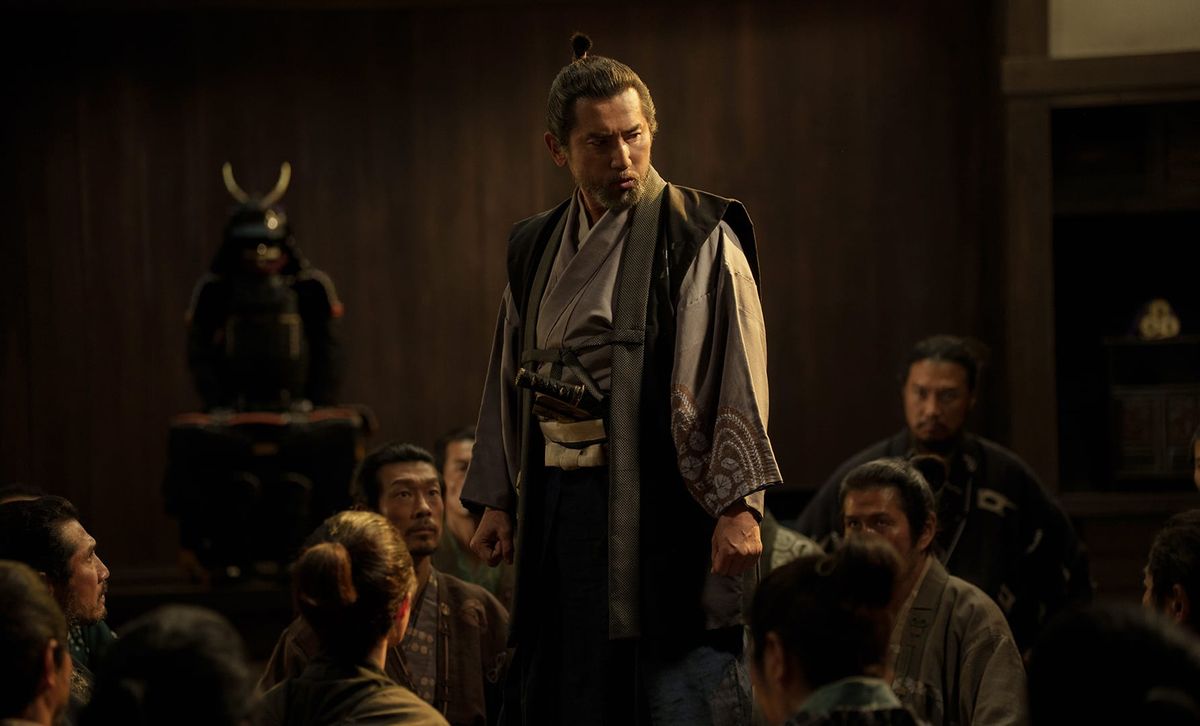
Historical dramas about Sengoku Japan tend to gravitate toward the inevitable giants — Nobunaga, Hideyoshi, Ieyasu — men whose reputations have become so enormous that everyone around them risks becoming scenery. THE SAMURAI AND THE PRISONER takes a more interesting route, narrowing its attention to Kuroda Kanbei and Araki Murashige while allowing the political chaos surrounding them to seep into nearly every conversation.
Director Kiyoshi Kurosawa approaches the period from an unusually intimate perspective, showing less interest in reconstructing the grand military sweep of the Sengoku era than in examining what living within its instability might have felt like. Armies remain important and castles remain vulnerable, but upheaval reaches the characters through rumours, conversations, messengers and rapidly changing calculations of loyalty.
The historical moment is essential, because 1578 places the film amid Oda Nobunaga’s expansion across central Japan. Nobunaga had accumulated enormous power without completing the unification later associated with Hideyoshi and Ieyasu, leaving his authority dependent upon regional lords and retainers whose loyalty was never entirely permanent. Murashige was no peripheral nuisance, having risen under Nobunaga to control much of Settsu Province from Arioka Castle, an important position between Kyoto and the western approaches toward the Mōri sphere.
His rebellion therefore arrived at an especially dangerous moment. Nobunaga was already fighting the prolonged conflict against Ishiyama Hongan-ji and its Mōri-backed opposition, while Hashiba Hideyoshi campaigned farther west during the Siege of Miki. Murashige’s defection opened another problem inside territory Nobunaga needed secure, giving the film a political landscape where supremacy exists without anything resembling certainty.
Kanbei’s presence at Arioka emerged from those shifting alliances. Before becoming famous as one of Hideyoshi’s most accomplished strategists, Kuroda Kanbei, also known as Kuroda Yoshitaka, served the Kodera clan in Harima and supported cooperation with Nobunaga. When Murashige rebelled, Kanbei entered Arioka hoping to persuade him to reconsider, only to be detained until Murashige’s position collapsed the following year.
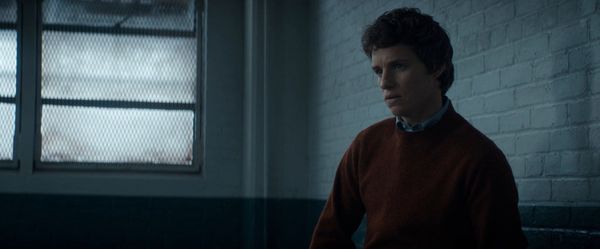
That imprisonment gives the film its dramatic centre, stripping a celebrated strategist of the thing that should define him: agency. Masaki Suda makes that loss fascinating because his Kanbei never becomes passive, retaining an unnerving intelligence even while confined and making every conversation feel like another opportunity to quietly regain control.
Suda’s performance depends upon ambiguity, with small changes in expression and delivery making Kanbei sympathetic, calculating, amused and faintly threatening without completely revealing which version is genuine. There is an appealing contradiction in watching a strategist unable to participate physically in the larger strategy around him, particularly when knowledge gives him an advantage in conversation without providing anything resembling security.
Masahiro Motoki has the more outwardly emotional role as Murashige, becoming an effective counterweight to Suda’s composure. Murashige is surrounded by uncertainty, aware that military pressure outside his walls is matched by suspicion within them, and Motoki allows that pressure to accumulate without reducing him to a hysterical warlord.
That distinction matters because Murashige could easily have become the uncomplicated villain. His rebellion provides an obvious framework through which to condemn him, particularly after Kanbei becomes his prisoner, but THE SAMURAI AND THE PRISONER is more interested in how loyalty deteriorates than in distributing simple moral judgments. Murashige’s precise historical motivations remain debated, while the consequences of his decision are considerably clearer.
Motoki plays him as someone whose authority cannot eliminate vulnerability, allowing fear, pride, suspicion and exhaustion to coexist beneath the posture expected of a lord. His control over Kanbei gives him immediate power, yet the hierarchy becomes increasingly unstable because political authority feels considerably less reassuring when an army is approaching your walls.
Their relationship consequently becomes stranger than a conventional confrontation between prisoner and captor. Kanbei possesses little physical power but considerable psychological presence, while Murashige possesses immediate authority without long-term certainty. Kurosawa finds tension within that imbalance, turning conversations into contests over what can safely be revealed and who actually possesses the upper hand.
The film is strongest when presenting Sengoku Japan as a political ecosystem where one decision can destabilize dozens of relationships. Allegiance is personal, military, familial and political at once, meaning loyalty to one person can rapidly become treachery toward another. The later unification of Japan is never treated as inevitable because, from 1578, Nobunaga’s dominance remained part of an unfinished struggle.
Nobunaga consequently feels present even when absent, his authority extending into rooms he never enters. Shingo Bando avoids playing one of Japanese history’s most recognizable warlords as an oversized caricature, instead reinforcing the film’s understanding that genuine power does not require constant theatrical demonstration when everyone already understands its consequences.
There is additional dramatic irony in knowing Murashige’s rebellion occurred only four years before Akechi Mitsuhide turned against Nobunaga at Honnō-ji in 1582. Kurosawa does not need to foreshadow that event directly, because Murashige’s rebellion already belongs to a political culture where even extraordinarily powerful rulers depended upon armed subordinates capable of changing allegiance.
Yuriko Yoshitaka brings similar restraint to Chiyoho, giving the castle’s growing unease a more intimate dimension. Her presence prevents the political drama from becoming exclusively concerned with military hierarchy, reminding us that rebellion threatens families and communities alongside the men making strategic decisions.
Arioka itself consequently becomes more than scenery. Murashige had developed the former Itami Castle into an extensive fortified complex incorporating the surrounding settlement, while Kurosawa focuses on corridors, rooms, walls and gates whose purpose becomes increasingly oppressive as the siege develops. Murashige may move freely through his own castle, but the consequences of rebellion gradually transform it into another kind of prison.
That spatial unease feels particularly appropriate for Kurosawa, a filmmaker long interested in environments capable of becoming psychologically threatening. Nothing supernatural needs to occupy these rooms because political uncertainty already gives them menace, while the weathered interiors and restrained production design create spaces that feel inhabited rather than displayed.
The photography frequently emphasizes distance between people sharing confined spaces, visually reinforcing distrust beneath their conversations. Costumes similarly establish rank and period without turning every frame into an exhibition, allowing the material world to support the drama rather than overwhelm it.
The film also understands that Sengoku Japan was undergoing transformations extending beyond warfare. Firearms had altered military practice following their sixteenth-century introduction, while Christianity spread through Portuguese and Jesuit contact, adding foreign technologies and beliefs to an already unstable political environment. These details prevent Kurosawa’s Japan from feeling culturally sealed away from the wider world.
There is confidence in how the film approaches this history, allowing names, clans and rivalries to exist without stopping for explanatory lectures. That makes the film more demanding for viewers unfamiliar with Sengoku politics, but I prefer occasional disorientation to dialogue written as though intelligent historical figures have suddenly decided to read introductory textbooks aloud.
The violence benefits from similar restraint, emerging from political tension rather than serving as the film’s principal attraction. Weapons are not decorative genre accessories but reminders that arguments about allegiance eventually have bodily consequences, while anticipation often carries more force than frequency.
Anyone expecting a conventional samurai epic driven by sword fights may therefore leave disappointed, but spectacle is never Kurosawa’s central concern. The film’s most consequential battles frequently occur through conversation, where a badly chosen sentence can become as dangerous as an exposed blade.
Its patience occasionally works against it, with some passages lingering beyond their dramatic importance while several secondary figures remain more politically interesting than emotionally developed. Historical density can replace character depth, and Kurosawa’s emotional restraint sometimes keeps fascinating people slightly farther away than necessary.
Those limitations never overwhelm the film’s ability to make history feel uncertain again. We know where Kanbei’s life eventually leads and what happens to Nobunaga, Hideyoshi, Murashige and Mitsuhide, but the characters experience none of those outcomes as predetermined. Historical inevitability exists only in retrospect.
Suda captures that uncertainty through calculation while Motoki captures it through mounting pressure, and their performances become increasingly complementary without either actor dominating their shared scenes. Suda’s stillness creates room for Motoki’s anxiety, while Motoki’s volatility makes Suda’s composure increasingly suspicious.
Kanbei’s imprisonment becomes compelling precisely because his later importance cannot rescue him from the vulnerability of the present. Before history turns someone into a brilliant strategist, legendary retainer, traitor, conqueror or footnote, they are simply a person attempting to survive circumstances whose ending has not yet been written.
The film’s greatest historical achievement is therefore not simply accuracy of costume, architecture or chronology, but perspective. Murashige’s rebellion, Kanbei’s captivity and Nobunaga’s campaigns are familiar as completed events, yet Kurosawa restores the contingency that chronology tends to erase. Arioka becomes a place where nobody can consult the next page, where political intelligence remains vulnerable to bad information, and where surviving long enough to become historically important is never guaranteed for anyone involved.
THE SAMURAI AND THE PRISONER is at its best when inhabiting that uncertainty, treating Sengoku Japan as something lived rather than remembered. Its deliberate pacing occasionally becomes too deliberate and its supporting characterization cannot always match the richness of its political environment, but those shortcomings exist within an intelligent and unusually textured historical drama.
Kurosawa’s patient direction is strengthened enormously by Motoki and Suda, whose opposing performances give emotional and intellectual weight to a film more interested in people trapped inside history than the mythology later built around them. By reducing an era famous for enormous battles and personalities to the uncertainty between a prisoner and his captor, Kurosawa finds something more compelling than another celebration of samurai legend: the uncomfortable experience of living through history before anyone knows what history will decide it meant.