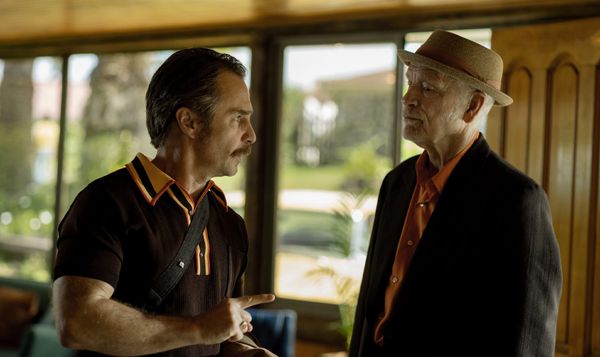
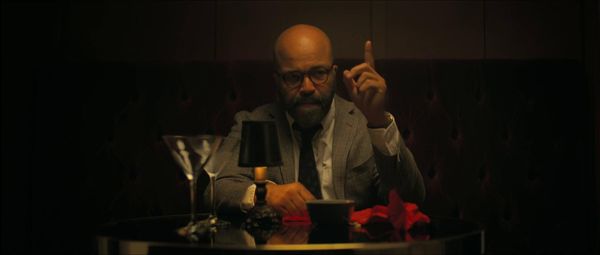
The road to hell is paved with good intentions.

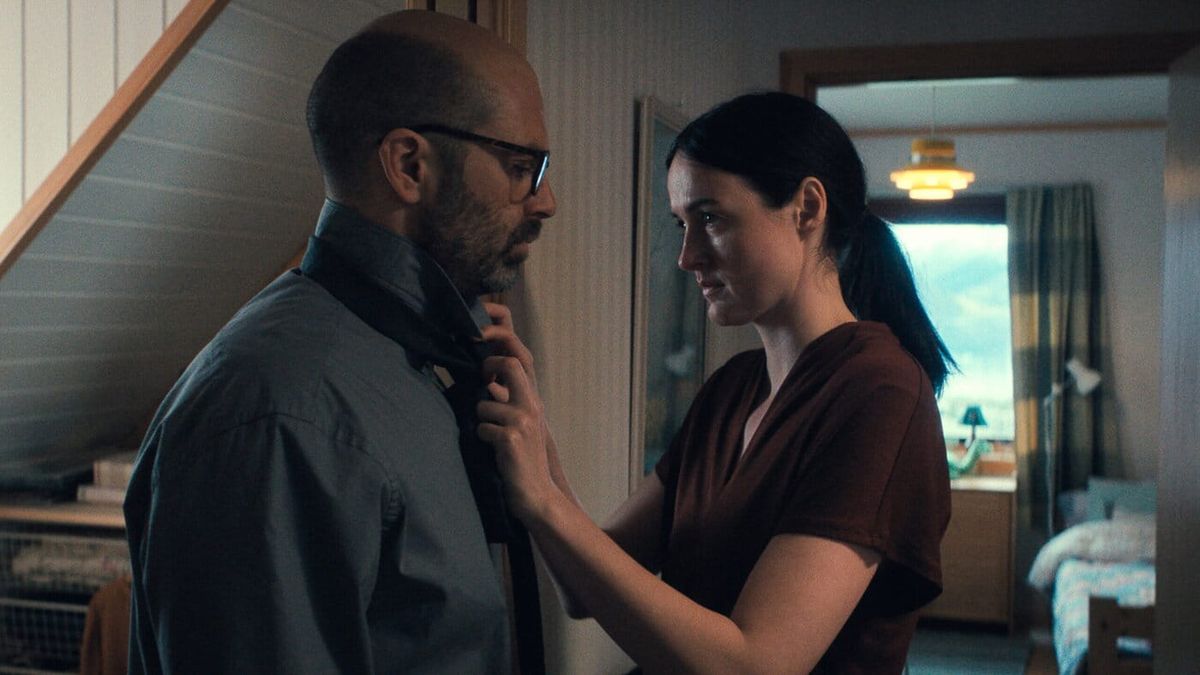
The trouble with being certain that you are doing the right thing is that you may never notice when you have begun doing the wrong one. In Cristian Mungiu's FJORD, a Romanian father believes he knows what is best for his children. Norwegian child protection authorities believe they know better. Both are convinced that their actions are necessary, yet neither seems particularly interested in the possibility that good intentions can lead to terrible consequences. Somewhere between their competing convictions are five children whose lives are being decided by adults who cannot agree on what it means to protect them.
Mungiu has made a career out of examining people caught between institutions, traditions, and their own moral convictions. His films rarely offer the comfort of a clear villain, and FJORD is no exception, although it occasionally comes close. Set against the spectacular mountains and cold waters of western Norway, this 146-minute drama follows a Romanian-Norwegian family whose attempt to build a new life gradually becomes an ordeal involving religion, parenting, and the state. It is an absorbing, sometimes frustrating film that asks difficult questions about authority without always giving its competing perspectives equal attention.
I approached FJORD with more personal baggage than I usually bring to a film. Born in Canada to Romanian parents, I grew up surrounded by Romanian traditions while developing my understanding of individual rights, multiculturalism, and public responsibility within Canadian society. I recognise certain Eastern European attitudes towards family and authority, but recognising them is not the same as agreeing with them. My interest in social justice and the responsibilities of institutions entrusted with protecting vulnerable people gave me another reason to connect with the film. These overlapping perspectives made Mungiu's examination of cultural differences and competing moral convictions particularly compelling.
Mihai Gheorghiu (Sebastian Stan) is a Romanian engineer who relocates from Bucharest to Norway with his Norwegian wife, Lisbet (Renate Reinsve), and their five children. They settle in a small coastal community, where the surrounding landscape seems to promise tranquillity and a fresh beginning. Their neighbours, the Halbergs, are initially welcoming, although the two families soon discover that they have considerably different understandings of religion, education, and personal freedom. What begins as a seemingly ordinary clash of values gradually develops into something far more consequential.
Mihai and Lisbet are devout Pentecostal Christians whose conservative religious convictions influence virtually every aspect of their children's upbringing. Obedience, traditional morality, and parental authority occupy important places within their household, while certain freedoms taken for granted by their neighbours are treated with suspicion. Mihai is particularly resistant to the suggestion that his beliefs should be adjusted to accommodate Norwegian social expectations. As far as he is concerned, he is raising his children properly, and the opinions of outsiders are of little consequence. His confidence begins to collapse when bruises are discovered on his teenage daughter, Elia (Vanessa Ceban), prompting an investigation by Norwegian child protection authorities.
There is a temptation to regard Mihai as a victim of an overzealous bureaucracy, particularly when the authorities begin exercising considerable influence over his family's future. Mungiu understands how frightening such circumstances would be for any parent. Yet Mihai is hardly an innocent man whose only offence is belonging to a religious minority. His stubbornness, attitudes towards discipline, and increasingly confrontational behaviour raise legitimate concerns, even when his love for his children appears genuine. A parent can love a child and still make decisions that harm them. An institution can have a legitimate responsibility to protect children and still exercise that responsibility poorly. These are not contradictions, although public discussions about child welfare frequently treat them as though they are.
Sebastian Stan delivers an exceptionally convincing performance as Mihai, capturing a man whose stubborn confidence gradually gives way to frustration and desperation. His portrayal is particularly effective because he makes the character difficult to sympathise with without rendering him impossible to understand. Mihai's anger is frequently counterproductive, yet beneath his confrontational behaviour lies the fear of someone watching his family slip beyond his control. Stan avoids reducing him to a conventional antagonist, instead presenting an individual whose pride, religious certainty, and genuine parental concern become increasingly difficult to separate. His Romanian background also lends an additional dimension to a performance in which nationality and cultural identity are central to the narrative.
Renate Reinsve is equally compelling as Lisbet, whose predicament is arguably even more complicated. Unlike Mihai, she understands Norwegian language and society, yet her familiarity with the country does little to protect her family from the growing uncertainty surrounding them. Caught between her religious convictions, loyalty to her husband, and concern for her children, Lisbet occupies an increasingly uncomfortable position within the conflict. Reinsve communicates much of her distress through subtle expressions, hesitant responses, and carefully restrained dialogue. Where Mihai frequently responds through anger, Lisbet appears to carry an exhaustion that grows heavier with each new development, providing the film with some of its most affecting moments.
The younger performers contribute an equally important emotional dimension, particularly Vanessa Ceban as Elia Gheorghiu. Her relationship with Noora (Henrikke Lund-Olsen), one of the Halberg children, introduces questions about independence and personal identity that complicate Mihai's understanding of family morality. Unfortunately, the children occasionally become secondary to the ideological disagreements surrounding them. As the investigation develops, the adults increasingly dominate the discussion, even though the consequences of their decisions fall most heavily upon the younger characters. I would have appreciated more opportunities to understand how the children interpret their circumstances, particularly when their welfare is repeatedly invoked by people who seem more interested in defending their own positions.
As a Romanian, I recognised some of the cultural attitudes surrounding Mihai's understanding of family life. Respect for parents, strong intergenerational relationships, and religious traditions have long occupied important places within Romanian society, although these characteristics vary enormously between families. Mihai's Pentecostal Christianity should not be confused with Romanian Orthodoxy, which has played a considerably larger historical role in the country's religious identity. His convictions are his own, even if certain expectations surrounding parental authority may seem familiar to those raised within Eastern European households. Cultural identity deserves respect, but it should never function as an exemption from responsibility, particularly when the safety and independence of children are concerned.
Growing up in Canada has shaped this part of my thinking considerably. Multiculturalism is frequently discussed as a celebration of languages, traditions, and different ways of life, but its more difficult questions emerge when people disagree about fundamental values. Respecting cultural diversity means accepting that others may live differently from us. It does not mean pretending that every practice is equally acceptable, nor should it require institutions to overlook credible concerns about a child's welfare. Conversely, unfamiliar religious beliefs or conservative traditions should never be treated as evidence of wrongdoing in themselves. There is an important distinction between disapproving of someone's values and possessing legitimate reasons to believe that harm may be occurring.
In FJORD, the discovery of bruising makes an investigation entirely reasonable. I would have found the authorities considerably more troubling had they ignored such concerns out of fear of appearing culturally insensitive. Children possess rights independently of their parents, and protecting those rights is among the most important responsibilities of any society. The more difficult question concerns what happens after an investigation begins. Authorities must determine whether children are safe while ensuring that their responses remain proportionate to the circumstances. Removing children from their families can itself produce considerable distress, and the consequences of unnecessary separation should never be treated casually. The purpose of intervention should be to identify genuine risks and provide meaningful protection, not to establish which adult possesses the stronger argument.
This is where my interest in social justice and community services most strongly influenced my response. Professionals entrusted with protecting vulnerable individuals must often make consequential decisions without possessing every piece of information. Sometimes immediate protective action is essential. In other circumstances, education, family support, and continued assessment may provide opportunities to address concerns without unnecessarily damaging important relationships. The challenge lies in recognising the difference while remaining accountable for the consequences of intervention. Mihai's defensiveness makes cooperation increasingly difficult, but fear should not automatically be mistaken for guilt. Equally, his frustration cannot excuse behaviour that places his children's welfare at risk.
The film also demonstrates how unfamiliar institutions can become intimidating, particularly for immigrants attempting to navigate systems they do not fully understand. Relocating to another country involves more than learning a language or adjusting to different social customs. Newcomers must also become familiar with legal procedures, public services, and expectations that may differ considerably from those of their country of origin. When disagreements arise, the imbalance of knowledge and authority between individuals and institutions can become a serious disadvantage. Mihai's inability to understand or accept the expectations placed upon him only deepens his frustration, creating a cycle of mistrust that becomes increasingly difficult to escape.
Romania's history adds another dimension to this examination of institutional authority. The country endured decades of communist dictatorship, culminating in Nicolae Ceaușescu's increasingly repressive government. Surveillance, political interference, and restrictions upon personal freedom shaped the lives of generations, leaving a complicated legacy concerning trust in public institutions. Although I was born in Canada long after the Romanian Revolution of 1989, these historical experiences remain part of my understanding of Romanian identity. I would never equate contemporary Norwegian child protection services with the institutions of communist Romania, as the historical circumstances are fundamentally different. Nevertheless, that history offers a reminder that institutions should never be considered beyond criticism simply because they claim to act in the public interest.
Mungiu has explored similar questions throughout his career. In 4 MONTHS, 3 WEEKS AND 2 DAYS, BEYOND THE HILLS, GRADUATION, and R.M.N., he examined the ways political systems, religious institutions, and social expectations influence individual lives. FJORD takes these interests beyond Romania without abandoning his fascination with people whose choices are constrained by forces larger than themselves. Norway, commonly associated with prosperity, social welfare, and progressive values, provides an especially interesting setting for a story about institutional power. Mungiu does not need to suggest that Norwegian society is inherently oppressive to question whether its institutions always exercise their responsibilities appropriately.
One of the film's most provocative ideas is that intolerance can exist within societies that consider themselves tolerant. The Gheorghius' religious conservatism makes them conspicuous among their neighbours, and their differences gradually become entangled with concerns about the children's upbringing. The question is whether the authorities can distinguish between genuinely harmful conduct and behaviour they simply find unfamiliar or objectionable. I found this aspect compelling, although Mungiu occasionally pushes his argument too far. Several Norwegian officials are portrayed with such severity that they begin to resemble representatives of an oppressive bureaucracy rather than individuals attempting to fulfil difficult professional responsibilities. Greater attention to their reasoning and professional dilemmas would have strengthened the film's moral complexity.
Fortunately, Mungiu's direction remains remarkably assured. His preference for extended scenes, carefully composed images, and uncomfortable conversations allows tension to accumulate without relying upon conventional thriller techniques. Ordinary domestic encounters and procedural discussions gradually acquire an atmosphere of mounting unease, while moments of silence frequently communicate more than the dialogue surrounding them. Rather than dictating precisely how audiences should interpret every interaction, Mungiu often allows contradictions to emerge naturally through the characters' behaviour. His observational approach is particularly effective when the film trusts viewers to recognise the uncomfortable distance between what individuals believe they are doing and the consequences of their actions.
The cinematography by Tudor Vladimir Panduru is among FJORD's most impressive achievements. Norway's towering mountains, expansive waterways, and isolated settlements are captured with extraordinary visual precision, creating images that are simultaneously beautiful and intimidating. Human beings appear remarkably small against the surrounding environment, an appropriate expression of the Gheorghius' growing powerlessness. What initially appears to be a place of freedom gradually becomes associated with confinement and uncertainty. There is something profoundly unsettling about watching people feel trapped in a landscape that seems almost impossibly open, and Mungiu understands how effectively natural beauty can contrast with the emotional hostility unfolding beneath it.
Despite its considerable strengths, FJORD could have benefited from greater discipline in its pacing. At 146 minutes, the film occasionally revisits arguments that have already been established, particularly as its intimate family drama expands into a broader confrontation over institutional authority and religious freedom. Certain supporting characters remain defined primarily by their positions within the central dispute, while the increasingly dialogue-heavy narrative sometimes sacrifices emotional development for ideological debate. I also found myself wishing that Mungiu trusted his audience a little more. His strongest moments allow us to observe the characters and recognise contradictions without being told what to think; his weaker passages seem determined to reinforce institutional criticisms at the expense of the ambiguity that makes the story interesting.
Nevertheless, FJORD remains an absorbing and deeply uncomfortable exploration of family, faith, cultural coexistence, and the responsibilities accompanying power. Its outstanding central performances, magnificent cinematography, and willingness to confront difficult moral questions make it a worthwhile addition to Mungiu's body of work. My Romanian background helps me understand certain attitudes towards family and authority, while my Canadian upbringing has shaped my appreciation for individual rights and cultural pluralism. Neither perspective provides a convenient answer to the conflict Mungiu presents, nor should either be treated as sufficient justification for overlooking the rights of vulnerable individuals.
Ultimately, the film's most troubling observation concerns the ease with which people confuse conviction with wisdom. Mihai believes his understanding of morality gives him the authority to determine what is best for his children, while the authorities appear similarly confident that their professional responsibilities justify the decisions they make. Neither seems particularly comfortable with uncertainty, even though uncertainty is precisely what their circumstances demand. FJORD does not always achieve the balance its subject deserves, but its questions remain difficult to dismiss. Its greatest achievement lies in reminding us that protecting human dignity requires more than simply believing ourselves to be on the right side of a moral argument. It requires humility, accountability, and a willingness to recognise when our own convictions may be causing the very harm we claim to oppose.
The road to hell may indeed be paved with good intentions, but good intentions are not the problem by themselves. The danger begins when people become so certain of their righteousness that they stop considering the consequences of their actions. For the children at the centre of FJORD, that distinction matters far more than which side eventually wins the argument.