Nothing is written.

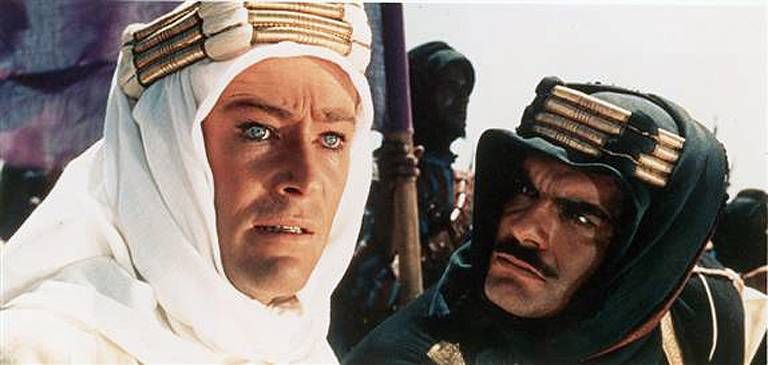
LAWRENCE OF ARABIA is a monumental achievement in cinematic scale, character study, and visual storytelling. David Lean transforms the story of T. E. Lawrence into something far greater than a traditional biography, exploring identity, ambition, myth, colonialism, and the complicated relationship between individuals and history. Rather than presenting its subject as a straightforward hero, the film embraces ambiguity, allowing Lawrence to remain both fascinating and elusive from beginning to end.
The brilliance of the film lies in its contradictions. Lawrence is presented as charismatic and extraordinary, yet deeply conflicted and impossible to fully understand. Peter O'Toole delivers one of the greatest performances ever committed to film, capturing both the irresistible magnetism that creates legends and the profound loneliness hidden beneath them. Every triumph seems to carry the seed of future tragedy, and O'Toole charts that gradual transformation with remarkable subtlety. His Lawrence is equal parts dreamer, strategist, narcissist, humanitarian, and enigma, ensuring the character resists easy interpretation long after the credits roll.
Surrounding O'Toole is one of cinema's finest supporting ensembles. Omar Sharif makes an unforgettable entrance from the shimmering desert horizon before delivering a performance filled with intelligence and quiet dignity as Sherif Ali. Alec Guinness lends Prince Faisal both wisdom and political calculation, while Anthony Quinn brings commanding authority to Auda Abu Tayi. Jack Hawkins, Claude Rains, José Ferrer, and Arthur Kennedy each contribute memorable performances that reinforce the film's rich political and cultural tapestry.
Lean's direction remains astonishing more than six decades later. Every composition feels meticulously crafted, balancing intimate psychological moments against landscapes of almost unimaginable scale. The desert is never merely a backdrop; it becomes an active participant in the story, reflecting Lawrence's growing confidence, his obsession with greatness, and his eventual spiritual disintegration. Few filmmakers have demonstrated such mastery over space, rhythm, and silence, allowing the vastness of the environment to communicate emotions that dialogue alone never could.
The technical achievements remain equally extraordinary. Freddie Young's Academy Award-winning cinematography transforms light, heat, and sand into some of the most breathtaking images ever photographed. Every sunrise, mirage, and distant silhouette feels monumental without sacrificing emotional intimacy. Complementing those visuals is Maurice Jarre's iconic score, whose sweeping main theme has become inseparable from the very idea of cinematic adventure while also carrying an undercurrent of melancholy that foreshadows Lawrence's unraveling.
Beneath its spectacular action lies an incisive examination of empire and power. The film refuses to romanticize imperial politics, instead revealing the competing ambitions of the British Army, Arab leaders, and foreign governments whose interests often collide beneath promises of liberation. Lawrence himself becomes caught between cultures and loyalties, admired by many yet never fully belonging to either world. His extraordinary achievements cannot shield him from manipulation by forces far greater than himself.
What makes LAWRENCE OF ARABIA endure is its willingness to question the very idea of heroism. The film examines how legends are constructed, how history simplifies complicated individuals into symbols, and how public admiration can become a prison. Lawrence gradually discovers that becoming a myth demands sacrifices no battlefield victory can justify, leaving him increasingly disconnected from the humanity that first drove his ambitions.
Its influence on world cinema is immeasurable. Countless historical epics have borrowed from Lean's visual language, yet few have matched the balance between overwhelming spectacle and intimate psychological depth achieved here. The famous match-cut alone remains one of the most celebrated edits in film history, demonstrating how bold cinematic technique can simultaneously propel narrative and deepen thematic meaning.
LAWRENCE OF ARABIA remains one of cinema's defining epics because its greatest spectacle is ultimately internal. Beyond the battles, politics, and endless horizons lies the haunting portrait of a man searching for purpose while slowly becoming a myth he can no longer control. It is both an awe-inspiring adventure and a deeply tragic meditation on identity, legacy, and the immense cost of transforming oneself into history's idea of greatness.